Best Time to Conceive: Understanding Your Fertile Window
A clear, evidence-based look at when you're most likely to conceive, the physical signs of peak fertility, and what actually moves your odds each cycle — plus honest answers on twins, egg count by age, and whether timing can influence your baby's sex.

If you're trying to conceive, timing matters more than almost anything else you have control over. The best time to conceive is during your fertile window — the six days that end on the day you ovulate, with the two days right before ovulation giving you the best odds of all. Outside that window, pregnancy essentially isn't possible in that cycle, no matter how often you have sex.
That's the short answer. The longer answer is more useful, because timing is only part of the picture. How reliably you can predict ovulation, your age, the health of your cycle, and a few things about sperm quality all play a role in how quickly you conceive.
This guide walks through exactly when your fertile window falls, how to recognize the physical signs that you're in it, and what really moves the needle on your odds each month. We'll also answer some of the most-searched questions on this topic honestly, including whether timing can influence your baby's sex, what raises your natural chances of twins, and how egg count actually changes with age. If you'd rather skip the math, 100 Calculator's Period & Fertility Tracker can estimate your fertile window in a few seconds, and once you conceive, the Pregnancy Due Date Calculator can estimate your due date.
Let's start with what's actually happening in your body each cycle, since that's what makes the rest of the timing advice make sense.
Understanding Ovulation and Your Fertile Window
Every month, your body prepares one egg for possible fertilization. Understanding that process is what makes the rest of this guide click into place. If you haven't started tracking your cycle yet, our guide on how to track your period accurately covers simple calendar and app-based methods to get started.
What Happens During Ovulation
Ovulation is the moment an ovary releases a mature egg into the fallopian tube. It's triggered by a sharp rise in luteinizing hormone (LH), which happens roughly midway through most cycles. For someone with a textbook 28-day cycle, that's usually around day 14, though plenty of healthy cycles land earlier or later than that.
Once released, the egg can only be fertilized for about 12 to 24 hours. After that, it breaks down, and your body sheds the uterine lining about two weeks later, which is your next period. That short lifespan is exactly why ovulation timing matters so much for conception.
The Six-Day Fertile Window
Your fertile window isn't just the day of ovulation. According to the American College of Obstetricians and Gynecologists (ACOG), the window of fertility runs from about five days before ovulation through the day after it, six days total in a typical cycle. Intercourse anywhere in that window can lead to pregnancy; outside of it, conception that cycle isn't possible.
How Long Sperm and Eggs Survive
The reason the fertile window stretches backward from ovulation, rather than starting on ovulation day, comes down to basic biology. Sperm can survive inside the female reproductive tract for up to five days, waiting for an egg to appear. The egg itself is far less patient, surviving only 12 to 24 hours after release.
That's why having sex in the days before ovulation can still lead to pregnancy; the sperm are already there and waiting when the egg arrives. Having sex more than a day after ovulation, on the other hand, is unlikely to result in pregnancy that cycle, since the egg has usually already broken down.
The Best Days to Try for Pregnancy
Not every day in your fertile window carries the same odds. Research has put real numbers on this, which is useful if you want to know exactly where to focus your energy.
Why the Days Before Ovulation Matter Most
A frequently cited study led by researcher Allen Wilcox, published in the New England Journal of Medicine, tracked couples trying to conceive and found that conception was essentially limited to intercourse occurring in the six-day window ending on ovulation day. Chances were lowest at the start of that window and rose as ovulation approached. Later reanalyses of similar data, which corrected for small errors in pinpointing the exact day of ovulation, found the single highest day was closer to one to two days before ovulation rather than ovulation day itself.
The practical takeaway is simple: if you can only time intercourse around one or two specific days, aim for the two days leading up to ovulation, not the day after it.
Can You Get Pregnant on the Day of Ovulation?
Yes. The day of ovulation itself is still well within the fertile window and carries a meaningfully high chance of conception, close to the peak days just before ovulation, even if it isn't always the single highest day.
Can You Get Pregnant After Ovulation?
Technically, yes, but the odds drop off sharply. Once the egg has been released, it survives for roughly a day. Intercourse the day after ovulation carries a small chance of conception, since the egg may still be viable for a few hours, but by two days after ovulation, it has typically broken down, and pregnancy from intercourse that cycle becomes very unlikely. If you're tracking ovulation and notice you've already ovulated, it's more useful to prepare for your next fertile window than to keep trying in the current one.
ACOG recommends having sex every day or every other day during the fertile window for the best overall odds, rather than trying to pinpoint one single "perfect" day. If daily sex isn't realistic, every other day works nearly as well and takes some of the pressure off.
Days After Your Period You Can Get Pregnant
This is one of the most common questions about conception, and the honest answer is that it depends entirely on how long your cycle is, not on a fixed number of days.
Short Cycles vs. Long Cycles
Ovulation happens roughly two weeks before your next period starts, not two weeks after your last one. That distinction matters because cycle length varies a lot from person to person.
If you have a shorter cycle, say 24 days, you could ovulate as early as day 10, which means unprotected sex just a few days after your period ends could result in pregnancy, especially if your period runs long and overlaps with the start of your fertile window. If your cycle runs closer to 35 days, ovulation might not happen until around day 21, giving you more of a buffer after your period ends.
This is also why counting a fixed number of "safe days" after your period is unreliable for anyone with irregular cycles. Our guide on signs of an irregular menstrual cycle walks through when cycle variation is normal and when it's worth a closer look.
Using a Fertility Tracker to Find Your Window
Rather than counting days from your last period, it's far more accurate to count backward from your next expected period, or to track ovulation signs directly. 100 Calculator's Period & Fertility Tracker does this automatically: enter your last period start date and average cycle length, and it estimates your fertile window and likely ovulation day for you. Our how to calculate ovulation guide breaks down the manual math if you'd rather work it out yourself.
Signs of Peak Fertility
Calendar math gets you close, but your body also gives off physical signals as you approach ovulation. Learning to read them adds real accuracy on top of date tracking.
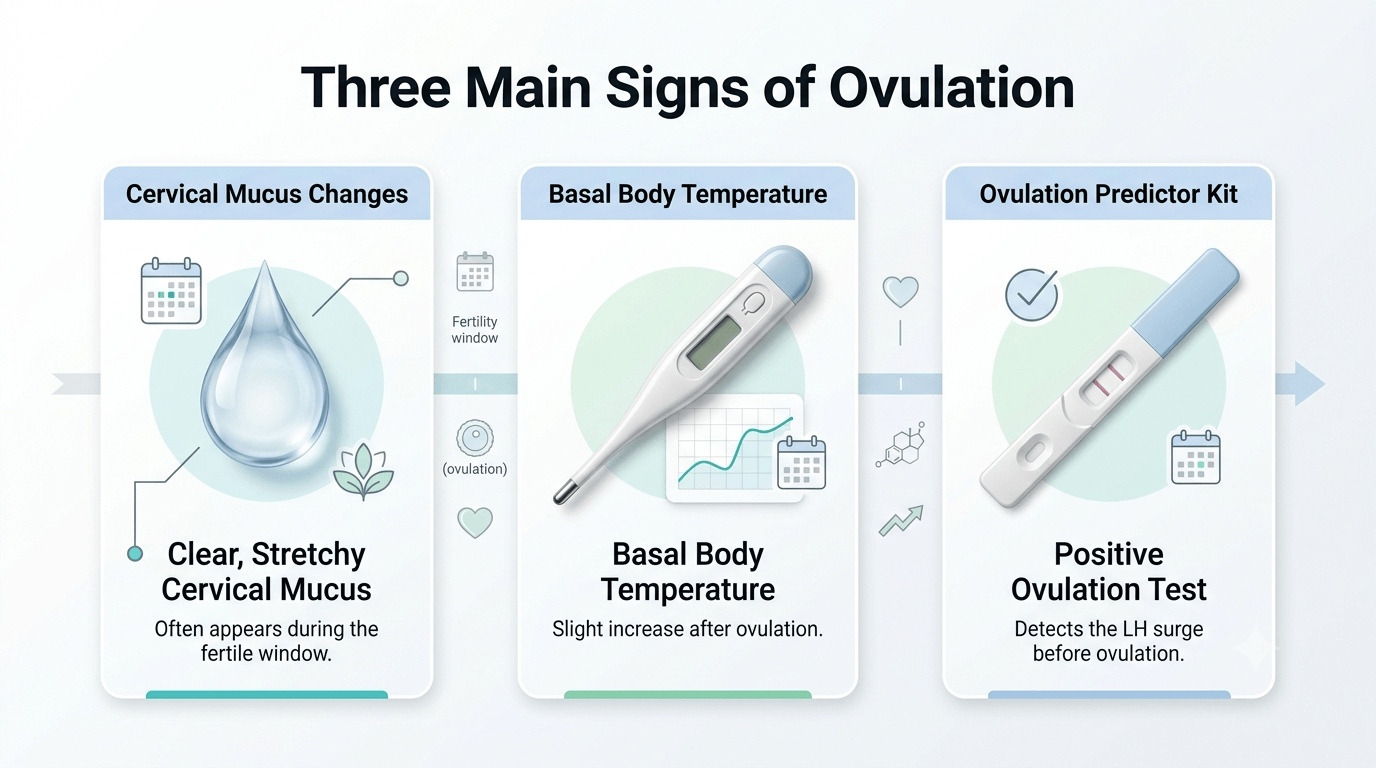
Cervical Mucus Changes
As ovulation approaches, cervical mucus shifts from sticky or absent to clear, slippery, and stretchy, often compared to raw egg white. This texture change is one of the most reliable physical signs of peak fertility, since it typically appears in the one to two days leading up to ovulation, exactly when your odds are highest.
A Rise in Basal Body Temperature
Basal body temperature (BBT), your resting temperature first thing in the morning, rises slightly, usually less than half a degree Fahrenheit, after ovulation and stays elevated until your next period. Because this rise happens after the egg has already been released, BBT confirms that ovulation happened rather than predicting it in advance. It's still useful for spotting your pattern over a few cycles. Our fertility window explained guide covers BBT charting in more detail.
Ovulation Predictor Kits and the LH Surge
Ovulation predictor kits (OPKs) detect the surge in luteinizing hormone that triggers ovulation, usually 24 to 36 hours before the egg is released. A positive test is one of the most direct signs that ovulation is imminent, which makes OPKs useful for pinpointing your most fertile one to two days in real time.
Mild Pelvic Twinges
Some people notice a mild, one-sided twinge or ache around ovulation, sometimes called mittelschmerz. It isn't universal, and it isn't precise enough to rely on alone, but combined with mucus changes or OPK results, it can add one more useful data point.
Combining two or more of these signs, often called the symptothermal method, tends to be more reliable than relying on any single one.
Is Pregnancy Guaranteed When You're Ovulating?
No, and this is one of the more common misconceptions about conception. Timing intercourse well around ovulation dramatically improves your odds, but it doesn't make pregnancy certain.
Average Odds by Cycle
According to ACOG, healthy couples in their 20s and early 30s have roughly a 25% to 30% chance of conceiving in any single cycle, even with well-timed intercourse. That percentage starts declining in the early 30s and drops more sharply after 37; by 40, the chance of conceiving naturally in a given cycle falls below 10%.
Those odds add up faster than they might sound. Most healthy couples conceive within about six months of regular, well-timed attempts, and roughly 80% to 85% conceive within a year.
Why Timing Alone Isn't Everything
Conception depends on several things lining up at once: a healthy egg being released, sperm reaching it in good condition, successful fertilization, and then successful implantation in the uterus. Perfect timing only guarantees the first of those conditions. It doesn't change egg or sperm quality, and it can't force implantation to succeed.
This is worth keeping in mind if you don't conceive right away, even with careful timing. One or two cycles without success is well within the normal range, not a sign that something is wrong.
Male Fertility: Timing and Sperm Health
Conception timing isn't only about the person ovulating. Sperm health and timing on the male side matter just as much, and they're often overlooked.
Does Time of Day Affect Sperm Quality?
This question comes up often, and the honest answer is that the evidence is mixed. Some small studies have found modest differences in sperm concentration between morning and evening samples, tied to the natural daily rhythm of testosterone, which tends to peak in the morning. Other studies haven't found a consistent pattern. In practice, there's no strong evidence that timing intercourse to a specific hour meaningfully changes your odds, so it's reasonable to focus on cycle timing rather than clock time.
How Often Should You Have Intercourse While Trying?
More important than time of day is abstinence length. The World Health Organization recommends roughly 2 to 7 days between ejaculations for the best balance of sperm count and motility; shorter gaps can lower semen volume, while much longer gaps tend to reduce motility even as total count rises. In practice, that lines up neatly with ACOG's advice to have sex every day or every other day during the fertile window, frequent enough to keep sperm quality in a good range, without the long gaps that can work against you.
Habits That Support Sperm Health
A few everyday habits are consistently linked to healthier sperm: maintaining a moderate weight, avoiding smoking and excess alcohol, limiting exposure to high heat around the groin, such as frequent hot tub or sauna use, and managing chronic stress. None of these guarantee results on their own, but together they support the conditions sperm need to function well.
Egg Count, Age, and Your Chances of Conceiving
Age affects fertility mostly through egg count and egg quality, both of which decline over time in a fairly predictable pattern.
How Many Eggs Does a Woman Have Over a Lifetime?
You're born with all the eggs you'll ever have, roughly 1 to 2 million at birth. That number drops to somewhere between 300,000 and 500,000 by puberty, and it keeps declining from there regardless of whether you're pregnant, on birth control, or ovulating that month. Of that original supply, only around 300 to 400 eggs are ever actually released through ovulation across a reproductive lifetime; the rest are gradually reabsorbed by the body.
Only one egg is normally released per cycle, which is also why hyperovulation, releasing more than one, is the main reason fraternal twins happen. More on that shortly.
Egg Count in Your Late 30s
Reproductive medicine research consistently points to a steep drop-off around this age: by 37, ovarian reserve has typically fallen to somewhere around 25,000 eggs, and the rate of decline speeds up further after that. By the early 40s, remaining egg count is often estimated in the low thousands, though egg count alone doesn't tell the whole story, since egg quality also declines with age. That's part of why both natural conception rates and fertility treatment success rates drop as women get older.
| Age | Approx. Egg Count Remaining | Chance of Pregnancy Per Cycle |
|---|---|---|
| Birth | About 1–2 million | Not applicable |
| Puberty | About 300,000–500,000 | Not applicable |
| 20s to early 30s | Several hundred thousand, still declining | About 25–30% |
| Around age 37 | About 25,000 | Declining more rapidly |
| Age 40 and older | Several thousand | Less than 10% |
Signs of Low Egg Count
Here's the part that surprises a lot of people: low ovarian reserve usually has no obvious symptoms. Most people find out through fertility testing, blood tests for FSH, estradiol, and anti-Müllerian hormone, plus an ultrasound antral follicle count, not from how they feel day to day. The one change some people do notice is a gradually shortening menstrual cycle. Difficulty conceiving after several months of trying is often the first real sign, which is exactly why testing, not symptom-watching, is the reliable way to check, according to the Cleveland Clinic.
Trying to Conceive a Boy or a Girl: What the Research Says
This is one of the most-searched questions about conception timing, so it's worth answering honestly rather than repeating popular folklore as fact.
A baby's biological sex is determined entirely by whether the sperm that fertilizes the egg carries an X or a Y chromosome; the egg always contributes an X. Because of this, the timing or conditions of intercourse have long been rumored to tilt the odds one way or the other.
The Shettles Method, Explained
The best-known theory here is the Shettles method, developed in the 1960s. It's based on the idea that Y-carrying sperm, associated with male babies, are faster but more fragile, while X-carrying sperm, associated with female babies, are slower but hardier. Following that logic, the method suggests having sex as close to ovulation as possible to favor a boy, or a few days before ovulation to favor a girl.
What the Evidence Actually Shows
The same large NEJM study mentioned earlier in this guide directly tested this idea. It tracked the timing of intercourse relative to ovulation across real pregnancies and found no meaningful relationship between timing and the sex of the baby. A separate controlled study reached a similar conclusion. In short, the best available research doesn't support using timing to influence sex.
| Popular Claim | What the Evidence Shows |
|---|---|
| Sex right at ovulation favors a boy | Large studies found no meaningful link between timing and the baby's sex |
| Certain sexual positions influence sex | No credible evidence supports this claim |
| Diet or vaginal pH can shift the odds | Not supported by rigorous, controlled research |
| IVF with genetic testing can select sex | Accurate; this is the only method with strong scientific support |
The only method with strong scientific backing for choosing biological sex is preimplantation genetic testing during IVF, a medical procedure rather than a timing strategy. If sex selection is a significant priority for you, that's a conversation worth having with a fertility specialist rather than something to plan around your calendar.
What About Conceiving Twins?
Twins come up a lot in conception searches, usually from people wondering if there's anything they can do to raise their odds.
What Raises Your Natural Odds of Twins
Fraternal, or non-identical, twins happen when two eggs are released and fertilized in the same cycle, a pattern called hyperovulation. Several factors are genuinely linked to a higher chance of this happening naturally: a family history of fraternal twins on the mother's side, being in your early-to-mid 30s rather than your 20s, having a higher body mass index or being taller than average, having had previous pregnancies, and certain ethnic backgrounds, which show naturally higher twinning rates in population studies. Fertility treatments that stimulate ovulation, such as certain fertility medications or IUI, raise the odds substantially further.
Identical vs. Fraternal Twins
Identical twins form when a single fertilized egg splits into two embryos early in development. Unlike fraternal twins, identical twinning happens at a fairly constant rate regardless of family history, age, or ethnicity; it behaves much more like a random event. There's no reliable way to influence your odds of identical twins specifically.
Naturally occurring twin pregnancies are relatively uncommon overall, and exact odds vary depending on the combination of factors above. If twins run in your family, or several of these factors apply to you, it's worth mentioning to your OB-GYN, but there's no proven method to deliberately conceive twins outside of fertility treatment.
Nutrition and Lifestyle Habits That Support Fertility
Diet won't override the effects of age or an underlying medical condition, but research does show it plays a measurable role in ovulation and overall fertility.
What Research Says About Diet and Ovulation
Some of the most detailed research on this comes from Harvard's Nurses' Health Study, which followed thousands of women over several years. It found that a dietary pattern higher in monounsaturated fats, such as olive oil, nuts, and avocados, plant-based protein, whole grains and other lower-glycemic carbohydrates, and full-fat rather than low-fat dairy was linked to a meaningfully lower risk of ovulation-related infertility. Adequate folate intake has also been consistently linked to better fertility and pregnancy outcomes. Similar research on Mediterranean-style eating patterns has found comparable benefits, including better outcomes among people undergoing fertility treatment.
Habits Worth Reconsidering
The clearest negative finding from that same body of research is trans fat, found in many processed and fried foods, which was consistently associated with a higher risk of ovulatory infertility. Being significantly underweight or overweight can also disrupt ovulation, as can very heavy exercise combined with low body weight. Smoking is one of the few habits with consistently strong evidence against fertility in both partners, and it's worth stopping well before you start trying. If you'd like help figuring out where your diet stands, 100 Calculator's Nutrition Calculator for Women can give you a starting baseline.
Common Causes of Difficulty Conceiving
If a few cycles of good timing haven't led to pregnancy, it's natural to wonder why. Most cases have an identifiable, treatable cause.
Ovulation Disorders
Problems with ovulation are the single most common cause of female infertility, according to ACOG. Polycystic ovary syndrome (PCOS) is behind a large share of these cases, though thyroid imbalances and irregular hormone signaling from the brain can also disrupt ovulation. If PCOS is part of the picture, 100 Calculator's Calorie Deficit Calculator for PCOS can help support a broader treatment plan alongside your doctor's guidance.
Tubal and Uterine Factors
Blocked or damaged fallopian tubes, often the result of past pelvic infections, endometriosis, or previous surgery, prevent sperm and egg from meeting and account for a similarly large share of cases. Structural issues with the uterus, like fibroids or scar tissue, make up a smaller but still meaningful portion.
Male Factor and Age-Related Decline
It's easy to assume infertility is a "female" issue, but male factor infertility, most often related to sperm count or function, contributes to roughly 40% to 50% of infertile couples' cases overall. Combined with age-related decline in egg quantity and quality, this is why a full evaluation typically looks at both partners rather than one.
| Cause | What It Involves |
|---|---|
| Ovulation disorders | Often linked to PCOS or a thyroid imbalance; disrupts regular egg release |
| Fallopian tube damage | Often from past infection, endometriosis, or pelvic surgery |
| Uterine or structural factors | Fibroids, scar tissue, or shape differences |
| Male factor | Sperm count, motility, or function issues |
| Unexplained | No clear cause identified after a full evaluation of both partners |
Note that these categories can overlap, since some couples have more than one contributing factor at once. ACOG recommends seeking an evaluation after 12 months of trying if you're under 35, after 6 months if you're 35 to 39, and sooner than that if you're 40 or older or have a known condition like PCOS or endometriosis.
Related Calculators
Put what you just read into practice, try these free tools instantly, no sign-up required.
Period & Fertility Tracker
Track your menstrual cycle and predict fertile days with ease.
Pregnancy Due Date Calculator
Estimate your baby's due date based on your last period.
Baby Growth Memory Calendar
Track and celebrate your baby's growth milestones month by month.
Nutrition Calculator for Women
Calculate daily nutrient and calorie needs tailored for women's health.
Pregnancy Weight Gain Calculator
Monitor healthy weight gain throughout each trimester of pregnancy.
How to Get Pregnant Faster: A Simple Action Plan
None of this needs to be complicated. A handful of habits, done consistently, cover almost everything the research supports.
- Track your cycle for at least two to three months to find your pattern, using a calendar or 100 Calculator's Period & Fertility Tracker.
- Watch for physical signs, cervical mucus changes, OPK results, or BBT trends, rather than relying on date math alone.
- Aim for sex every day or every other day during your fertile window, prioritizing the two days before ovulation and ovulation day itself.
- Keep a stable, moderate weight, and build meals around whole foods, plant protein, and healthy fats.
- Start a prenatal vitamin with folic acid before you conceive, not just after.
- Cut out smoking and limit alcohol, for both partners.
- Keep abstinence length in a reasonable range; roughly every 2 to 3 days keeps sperm quality in a good spot.
When to See a Doctor
Give it time before assuming something's wrong. ACOG recommends seeing an OB-GYN after a year of trying if you're under 35, after six months if you're 35 to 39, and right away if you're 40 or older or already know you have a condition like PCOS, endometriosis, or irregular cycles. A doctor can check both partners and often identify a clear, treatable cause.
Once you do conceive, 100 Calculator's Pregnancy Due Date Calculator can estimate your due date right away, and our pregnancy week-by-week guide is a good next stop.
Medical disclaimer: This article is for general educational purposes only and isn't a substitute for professional medical advice, diagnosis, or treatment. Fertility varies from person to person, so always talk to a licensed healthcare provider about your own cycle, timing, or any concerns about conceiving.
More From Women's Health Guides
Still building your knowledge of cycles, fertility, and pregnancy timing? These related guides dig deeper into the topics covered above.
Frequently Asked Questions
What is the best time to conceive during my cycle?
Your best time to conceive is during your fertile window, the six days ending on the day you ovulate. Research suggests the two days right before ovulation carry the highest odds of any single day, though intercourse anytime during this six-day window can lead to pregnancy. If you're not sure when you ovulate, tracking your cycle for two to three months, or watching for signs like cervical mucus changes, is the most reliable way to pinpoint it.
Can I get pregnant two days after ovulation?
It's very unlikely. An egg typically survives only 12 to 24 hours after ovulation, so by two days afterward, it has usually already broken down and can no longer be fertilized. Pregnancies from intercourse this late in the cycle are rare. If you've confirmed ovulation already happened, it's more useful to prepare for your next fertile window than to keep trying in the current one.
What three days give you the best chance of getting pregnant?
The two days immediately before ovulation, plus the day of ovulation itself, generally offer the highest odds of conception in a typical cycle. Research on timing and pregnancy has found intercourse during this narrow stretch is associated with the greatest chance of success, though the full fertile window actually spans about six days, starting five days before ovulation.
Is it guaranteed that I'll get pregnant if I have sex during ovulation?
No. Even with perfectly timed intercourse, healthy couples in their 20s and early 30s have roughly a 25% to 30% chance of conceiving in any single cycle, according to ACOG. Timing puts the odds in your favor, but egg quality, sperm quality, fertilization, and implantation all have to line up too, so it's normal for conception to take more than one well-timed cycle.
How many days after my period can I get pregnant?
There's no fixed number of days, because it depends on your cycle length. Ovulation happens roughly two weeks before your next period, not two weeks after your last one, so someone with a short cycle could become fertile just days after their period ends, while someone with a longer cycle has more of a gap. Tracking your specific cycle is more reliable than counting a set number of days.
What are the signs that I'm at peak fertility?
The clearest signs are clear, stretchy cervical mucus similar to raw egg white, a positive result on an ovulation predictor kit, which detects the LH surge, and sometimes a mild, one-sided pelvic twinge. A rise in basal body temperature confirms ovulation after the fact rather than predicting it. Combining two or more of these signs together tends to be more reliable than relying on just one.
How many eggs are released during ovulation?
Typically just one. Each cycle, several follicles begin developing, but usually only one becomes dominant and releases its egg. Occasionally more than one egg is released in the same cycle, a pattern called hyperovulation, which is how fraternal twins are conceived. Across an entire reproductive lifetime, only about 300 to 400 eggs are ever actually ovulated, out of the much larger supply a person is born with.
How many eggs does a woman have left in her late 30s, and does egg supply really drop that fast?
Yes, the drop is real. Research on ovarian reserve suggests egg count falls from roughly 1 to 2 million at birth to around 300,000 to 500,000 by puberty, then continues declining steadily. By age 37, reserve typically falls to around 25,000 eggs, and the rate of decline speeds up further after that. This is separate from egg quality, which also declines with age and affects both natural conception and fertility treatment success.
What are the top three causes of female infertility?
The three most common categories are ovulation disorders, often linked to PCOS, damage or blockage in the fallopian tubes, often from past infection, endometriosis, or surgery, and structural issues with the uterus, according to ACOG and reproductive medicine research. Age-related decline in egg quantity and quality is also a major contributing factor. It's worth noting that male factor infertility contributes to roughly 40% to 50% of infertile couples' cases as well.
What are the signs of a low egg count?
Most people with a low egg count, also called diminished ovarian reserve, don't notice any symptoms at all. It's usually discovered through fertility testing rather than day-to-day signs. The one change some people do notice is a gradually shortening menstrual cycle. Difficulty conceiving after several months of well-timed attempts is often the first real indicator, which is why blood tests and ultrasound, not symptom-watching, are the reliable way to check.
Can timing sex around ovulation help me conceive a boy or a girl?
There's a popular theory, known as the Shettles method, suggesting that timing, sexual position, and other factors can influence a baby's sex. However, a large, frequently cited study published in the New England Journal of Medicine specifically tested this idea and found no meaningful link between intercourse timing and the sex of the baby. The only method with strong scientific support for choosing biological sex is preimplantation genetic testing during IVF.
What raises the natural chances of having twins?
Fraternal twins happen when more than one egg is released and fertilized in the same cycle. Factors linked to a higher natural chance of this include a family history of fraternal twins on the mother's side, being in your early-to-mid 30s, having a higher BMI or being taller than average, prior pregnancies, and certain ethnic backgrounds. Identical twins, by contrast, occur at a fairly constant rate regardless of these factors.
Does the time of day affect sperm quality?
The evidence is mixed. Some small studies suggest slightly higher sperm concentration in morning samples, tied to testosterone's natural daily rhythm, but other studies haven't found a consistent pattern. There's no strong evidence that timing intercourse to a specific hour meaningfully improves your odds. Abstinence length matters more; the World Health Organization recommends roughly 2 to 7 days between ejaculations for the best balance of sperm count and motility.
What can I do to get pregnant faster?
Track your cycle for a few months to find your pattern, watch for physical signs of ovulation like cervical mucus changes, and aim for sex every day or every other day during your fertile window, especially the two days before ovulation. Maintain a healthy weight, eat a nutrient-rich diet, take a prenatal vitamin with folic acid, and avoid smoking. If you're under 35 and haven't conceived after a year of trying, talk to your OB-GYN.
About 100 Calculator
100 Calculator is a free hub of online calculators and educational guides covering health, finance, trading, crypto, education, and more. Every tool is built to be fast, accurate, and genuinely free, with no account or signup required.
We built this guide, and tools like the Period & Fertility Tracker and Pregnancy Due Date Calculator referenced throughout it, to make one of life's biggest questions a little easier to plan around. Head back to the 100 Calculator homepage to explore the full library of tools, or learn more about the team behind them on our About Us page.