How to Track Your Period Accurately
A clear, judgment-free walkthrough of every practical way to track your period — calendars, apps, temperature charts, and more — so you always have a reliable sense of what your body is doing next.

Most of us learn the basics of periods young, then spend years quietly guessing at the details. When will it actually start? Is being five days late something to worry about? Why does the flow feel heavier some months than others? A period tracker takes the guesswork out of these questions by recording your cycle over time, so you can spot patterns instead of relying on memory alone.
A period tracker is a tool — a paper calendar, a notebook, or an app — that records the start date of your period along with symptoms like flow and mood, so you can predict future cycles and notice changes worth mentioning to a doctor. Some people use a simple wall calendar. Others prefer an app that also estimates ovulation and fertility. Both approaches work, and the right one is whichever you'll actually stick with.
Tracking your period accurately isn't about obsessing over dates. It's about giving yourself useful information: roughly when your next period will arrive, when you're most likely to be fertile, and when something looks different enough to flag. If you want a head start, 100 Calculator's Period & Fertility Tracker does the date math for you the moment you enter your last period.
In this guide, we'll walk through calendar tracking, app-based tracking, natural methods like temperature and cervical mucus tracking, and the small mistakes that throw off predictions. First, it helps to understand what's actually happening in your body during a cycle, because that's what makes tracking make sense in the first place.
Understanding the Menstrual Cycle
Your menstrual cycle is the time from the first day of one period to the first day of the next one. Most cycles fall somewhere between 21 and 35 days, with 28 days often used as the textbook average. (ACOG) Very few people hit exactly 28 days every single month, and that's normal too.
Four hormones drive the whole process: estrogen, progesterone, luteinizing hormone (LH), and follicle-stimulating hormone (FSH). They rise and fall in a fairly predictable rhythm, which is exactly why tracking works. Once you know your pattern, you can anticipate what's coming.
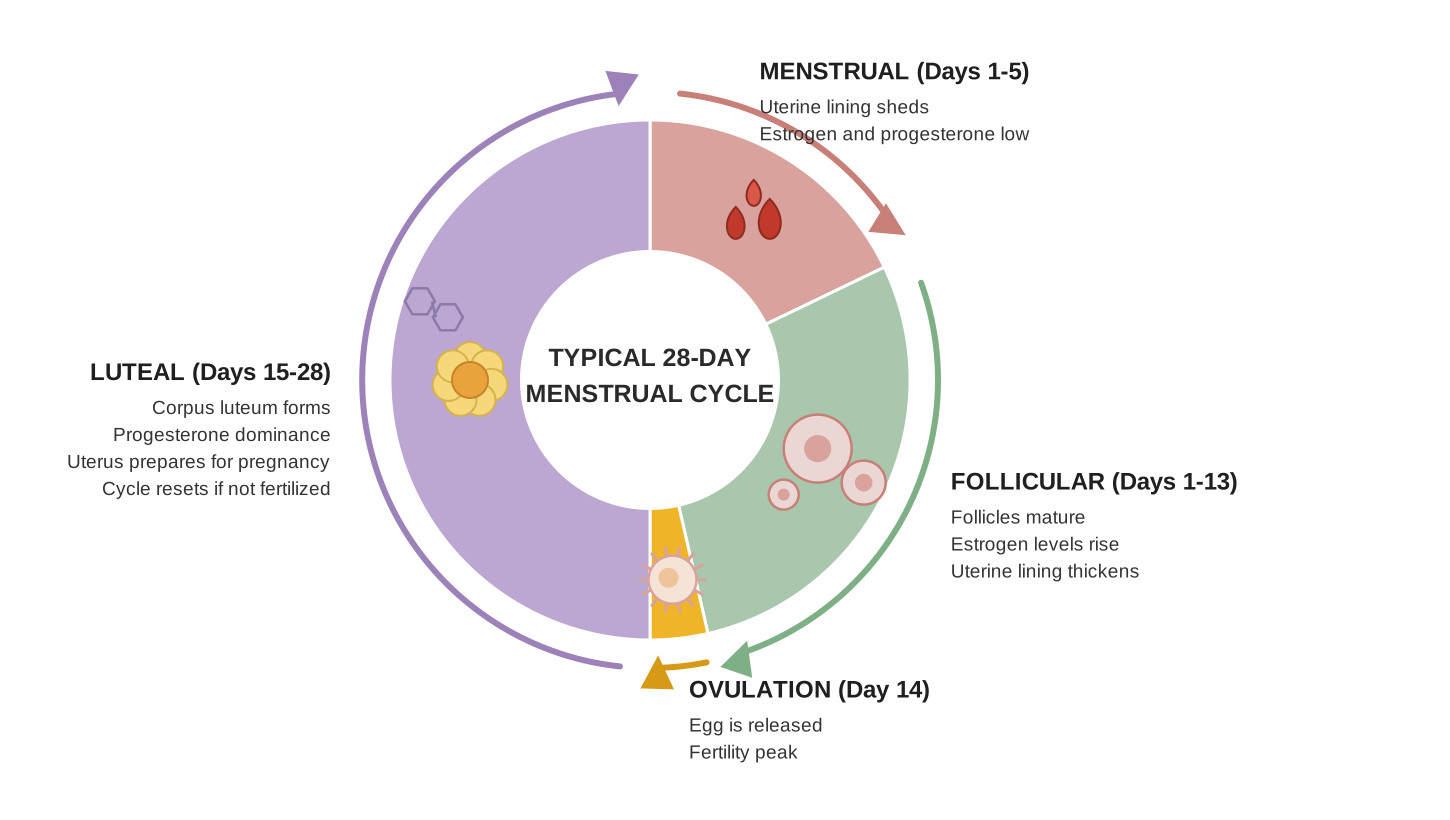
The Four Phases of Your Cycle
Every cycle moves through four overlapping phases. Here's what's happening in each one:
| Phase | Typical Timing | What's Happening |
|---|---|---|
| Menstrual phase | Days 1–5 | The uterine lining sheds; this is your period |
| Follicular phase | Days 1–13 | Overlaps with your period; estrogen rises as follicles mature |
| Ovulation | Around day 14 | A mature egg is released; LH surges sharply |
| Luteal phase | Days 15–28 | Progesterone rises to prepare the uterine lining, then falls again if there's no pregnancy, triggering the next period |
What Counts as a "Normal" Cycle Length
A cycle length of 21 to 35 days is considered typical for adults. Cycles often run longer and less predictable for the first couple of years after a first period, and again in the years leading up to menopause. What matters most for tracking purposes is your own baseline, not a textbook number.
Why Track Your Period? The Real Benefits
It's easy to assume period tracking is just for people trying to conceive, but the benefits go well beyond that. A few months of consistent tracking gives you a genuinely useful snapshot of your health.
Predicting Your Next Period
The most obvious benefit is knowing roughly when to expect your period, so you're not caught off guard while traveling, at work, or on a big day out. Most trackers need two to three logged cycles before predictions start to feel reliable.
Spotting Irregular Cycles Early
Tracking makes it much easier to notice when something shifts — a cycle that's suddenly much shorter, a period that skips a month, or bleeding that's heavier than usual. We'll cover exactly what those changes can look like, and when they're worth a second look, later in this guide.
Planning Around Ovulation and Fertility
If you're trying to conceive, or trying not to, knowing your fertile window changes how you plan your month. We cover this in more depth in our fertility window guide, but the short version is that tracking your cycle is the first step to estimating it.
Understanding Your Body Better
Beyond dates, tracking symptoms like cramps, mood, energy, and skin changes over a few months often reveals patterns you'd never notice otherwise, like consistently low energy right before your period, or headaches that show up like clockwork a few days beforehand. For a deeper look at what your cycle can reveal.
A quick look at what regular tracking actually gives you:
- A reasonably accurate estimate of your next period, so fewer surprises
- A general sense of your fertile window each cycle
- An early warning system for cycles that look different than usual
- A useful symptom log to bring to a doctor's appointment
- A better understanding of how sleep, stress, and travel affect your body
Not sure which tracking method fits your lifestyle? Here's a quick comparison before we walk through each one in detail:
| Method | Best For | Effort Level |
|---|---|---|
| Calendar | Simple date tracking, no tech required | Low |
| App | Automatic predictions and reminders | Low |
| BBT charting | Confirming ovulation, trying to conceive | Medium |
| Cervical mucus tracking | Identifying your fertile window naturally | Medium |
| Symptom journaling | Understanding mood, pain, and energy patterns | Low |
How to Track Your Period on a Calendar
A calendar is still one of the most reliable ways to track your period, precisely because it's simple. No app, no account, no notifications, just a date circled in pen.
Step-by-Step: Calendar Tracking Method
Here's how to track your period on a calendar from scratch:
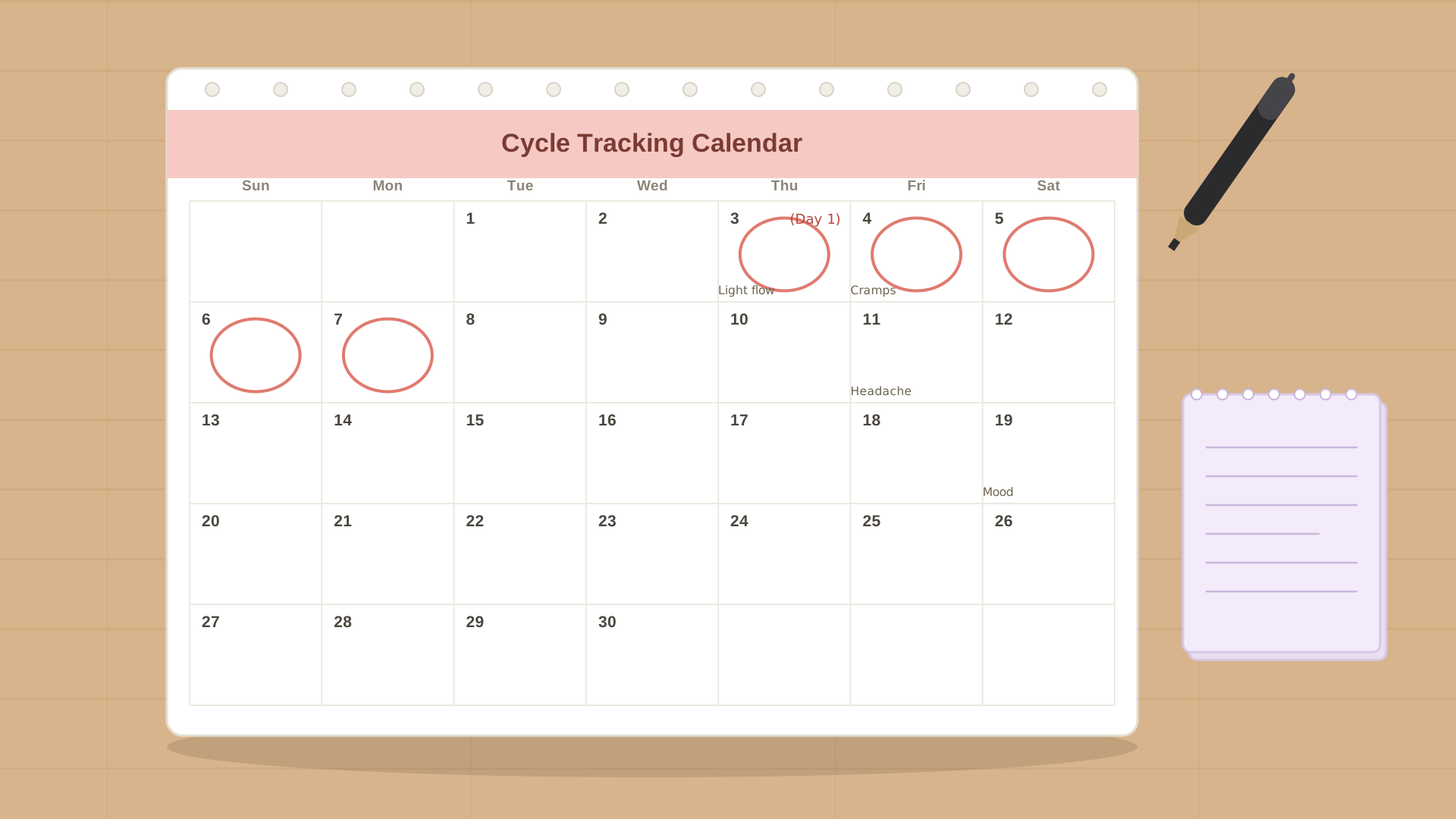
- Mark day one. The first day of full flow, not light spotting, is day one of your cycle.
- Keep marking each day of bleeding until it stops, so you know how many days your period itself lasts.
- Count forward to the next day one. That total number of days is your cycle length.
- Repeat for three to six cycles so you can calculate your average cycle length instead of relying on a single month.
- Note symptoms next to each date — cramps, mood, flow intensity — so the calendar becomes more than just a date log.
Do You Count 28 Days From the Start or End of Your Period?
Always from the start. Cycle length is measured from the first day of one period to the first day of the next, not from the last day of bleeding. For example, if your period starts on March 3rd and your next one starts on March 31st, your cycle is 28 days long, no matter whether the bleeding itself lasted four days or seven.
How to Track Your Period With an App
If a calendar feels like one more thing to remember, an app does the same job with less effort. You log a date, and the app handles the math, the reminders, and usually a prediction for your next few cycles.
What to Look for in a Period Tracker App
Not every app needs to do everything. Before picking one, it helps to know what actually matters:
- Simple, fast daily logging that doesn't feel like a chore
- Cycle and ovulation predictions that improve as you log more data
- Clear symptom tracking for flow, mood, and pain
- Reminders you can turn on or off
- Transparent privacy settings, especially around how your health data is stored and shared
Popular Period Tracking Apps (and a No-App Option)
Apps like Clue and Flo are among the most widely used cycle trackers, and both let you log periods and symptoms from your phone, with predictions that sharpen after a few months of data. They work well if you want a dedicated app experience with reminders built in.
Free Online Tool
Prefer not to download another app?
100 Calculator's Period & Fertility Tracker runs right in your browser. Enter your last period and average cycle length, and it estimates your next period and fertile window instantly, with no account required.
How to Track Your Period and Ovulation Together
Your period and your fertile window are closely connected, even though they happen roughly two weeks apart. Tracking both together gives you a much fuller picture than tracking bleeding alone.
Signs of Ovulation to Watch For
Around the middle of your cycle, your body sends a few subtle signals that ovulation is happening. A mild twinge on one side of your lower abdomen, a small bump in libido, and slightly stretchier cervical mucus are common signs. Our guide to calculating ovulation breaks each of these down in more detail.
Using Basal Body Temperature (BBT) to Track Your Cycle
Basal body temperature is your resting temperature first thing in the morning, before you sit up, talk, or even check your phone. It typically rises by less than half a degree Fahrenheit right after ovulation and stays elevated until your next period starts. (Cleveland Clinic) Taking your temperature at roughly the same time every morning with a basal thermometer lets you confirm that ovulation happened, after the fact.
This method takes a little patience, since it only confirms ovulation once it's already happened, but charted over a few months it becomes a genuinely reliable way to learn your personal pattern. For more on timing this around trying to conceive, see our guide on the best time to conceive.
Cervical Mucus Changes During Your Cycle
Cervical mucus changes texture across your cycle, and learning to notice the shift is one of the oldest fertility-tracking methods there is. Clear, slippery mucus signals your most fertile days, while thicker, drier mucus points to lower fertility. (Cleveland Clinic)
| Cycle Stage | Typical Mucus | Fertility Level |
|---|---|---|
| Right after your period | Little to none, dry | Low |
| A few days later | Sticky or tacky, cloudy | Low to moderate |
| Approaching ovulation | Creamy, whiter | Moderate |
| Around ovulation | Clear, stretchy, egg-white-like | High |
| After ovulation | Thick again, or dry | Low |
Combining cervical mucus observations with calendar tracking and BBT is often called the symptothermal method, and it gives a far clearer picture than any single sign on its own. Our guide on tips to improve fertility builds on these same signs in more detail.
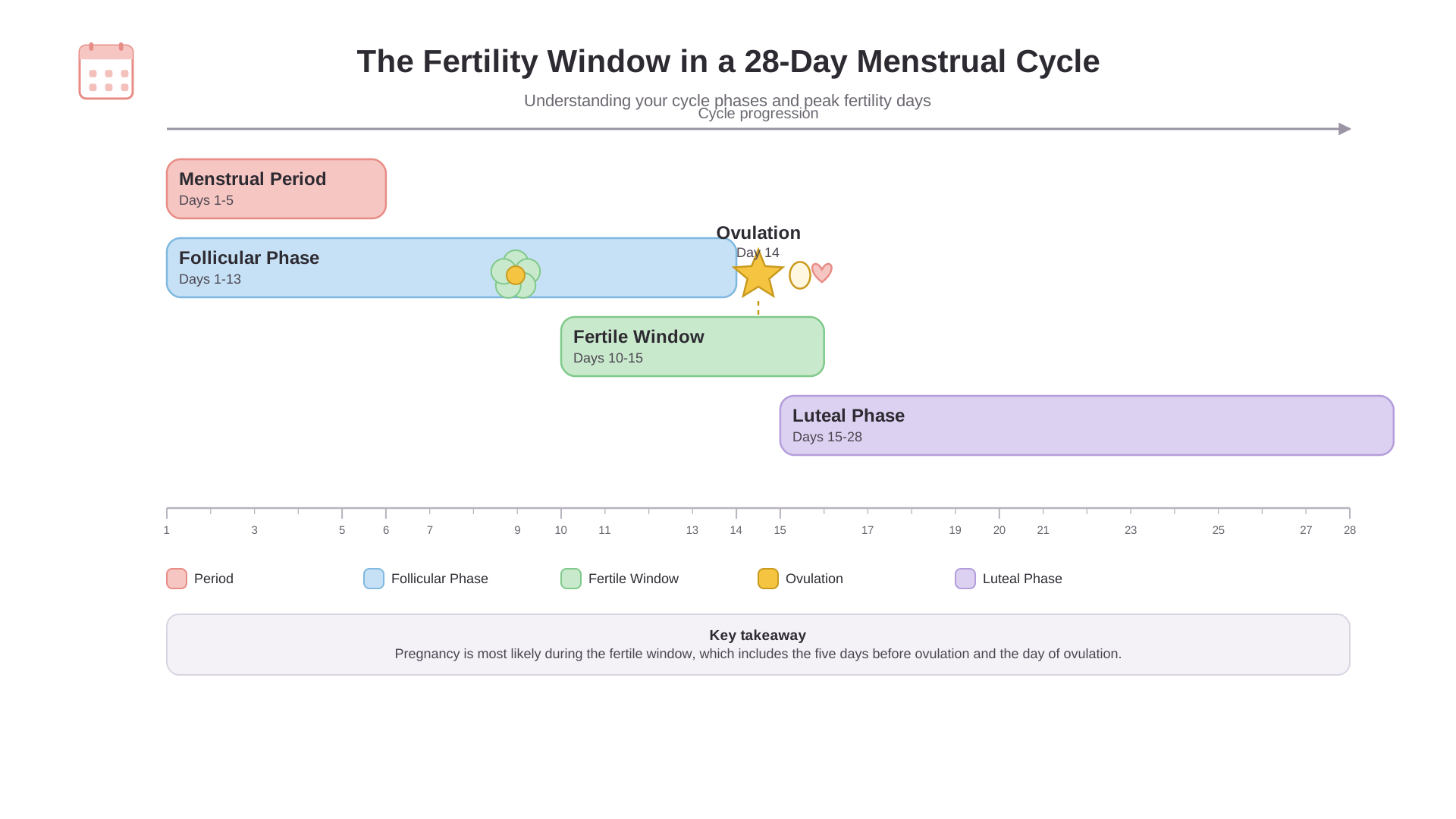
If you're actively planning a pregnancy, pairing ovulation tracking with 100 Calculator's Pregnancy Due Date Calculator can help you see how a given cycle would translate into an estimated due date once conception happens.
Natural Ways to Track Your Period
Not everyone wants an app tracking their cycle, and that's completely reasonable. The methods below rely on your own observations instead of software.
The Rhythm and Symptothermal Methods
The rhythm method estimates your fertile window using past cycle lengths alone, while the symptothermal method combines that calendar data with basal body temperature and cervical mucus observations for a more complete picture. Both take a few cycles of practice before the patterns feel reliable.
Journaling Your Symptoms
A plain notebook works surprisingly well. Each day, jot down flow, if any, mood, energy, cramps, and anything else that stands out, like headaches or skin changes. After a couple of months, patterns tend to jump out on their own, no chart required.
Common Period Tracking Mistakes to Avoid
Even with the right tool, a few habits can quietly throw off your predictions. Here's what to watch for:
- Only logging heavy flow days. Light spotting still counts as day one if it's the start of your period.
- Giving up after one cycle. Predictions need at least two to three logged cycles to mean anything.
- Skipping symptoms. Dates alone tell you when; symptoms tell you why something feels off.
- Assuming every cycle is identical. A few days of variation month to month is normal, not a tracking error.
- Forgetting to log during travel or illness, which is exactly when your cycle is most likely to shift and most useful to record.
Irregular Cycles: Why Your Period Might Be Late or Unpredictable
Even with perfect tracking, cycles don't always cooperate. Here's what's usually behind a late or unpredictable period.
Why Is My Period Late?
Stress, travel, illness, sudden weight changes, and intense exercise are some of the most common reasons a period shows up late. Hormonal conditions like polycystic ovary syndrome (PCOS) or a thyroid imbalance can also delay ovulation, which pushes the whole cycle back. (ACOG) If pregnancy is possible, a home test is a reasonable first step.
If irregular cycles seem tied to weight or metabolism, 100 Calculator's Calorie Deficit Calculator for PCOS can help you build a nutrition plan around your specific situation, alongside guidance from your doctor.
Can Stress or Cortisol Delay Your Period?
Yes, and this is one of the most common causes of a late period. High stress raises cortisol, which can interfere with the hormonal signals your brain sends to your ovaries, sometimes delaying or skipping ovulation entirely. (Cleveland Clinic) Since your period arrives about two weeks after ovulation, a delayed ovulation means a delayed period. A stress-related period usually looks and feels like a normal one, just later than expected, though it can occasionally be lighter if the cycle didn't fully ovulate.
Why Does My Period Change Dates Every Month?
A few days of drift from cycle to cycle is completely normal, since ovulation rarely lands on the exact same day every month. Sleep, travel, diet, and exercise changes can all nudge the timing slightly.
If your cycle length swings by more than about a week on a regular basis, our guide to signs of an irregular menstrual cycle can help you tell the difference between normal variation and a pattern worth discussing with a doctor.
Understanding Period Flow and the 7-2-1 Rule
Flow varies enormously from person to person, and tracking it over time is often more useful than comparing yourself to anyone else's "normal."
What Is a Heavy Period?
On average, a period involves losing around 30 to 40 milliliters of blood in total, and anywhere up to about 80 milliliters is still generally considered typical. Doctors usually define heavy menstrual bleeding, called menorrhagia, as blood loss beyond that 80-milliliter mark. (ACOG) Since measuring exact volume at home isn't realistic, doctors rely on practical signs instead, like soaking through a pad or tampon every hour or two, passing large clots, or bleeding that lasts longer than a week.
The 7-2-1 Rule for Menstruation
You may have come across the 7-2-1 rule, a simple checklist some health educators use to flag periods worth mentioning to a doctor:
- 7: Your period regularly lasts longer than 7 days.
- 2: You need to change a pad or tampon every 2 hours or less because of heavy flow.
- 1: You're passing blood clots larger than 1 inch, roughly the size of a quarter.
None of these on their own is an emergency, but noticing any of them consistently is a good reason to bring it up at your next appointment.
| Symptom | Usually Typical | Worth Mentioning to a Doctor |
|---|---|---|
| Bleeding length | 3–7 days | Longer than 7 days, regularly |
| Pad/tampon changes | Every 3–4 hours | Every 1–2 hours for several hours straight |
| Clots | Small, occasional | Larger than an inch, frequent |
| Cramps | Manageable with rest or OTC pain relief | Severe enough to disrupt daily activities |
Heavy periods over time can also lead to iron-deficiency anemia, since you're losing more iron than usual each cycle. (Mayo Clinic) If you suspect your flow runs on the heavier side, 100 Calculator's Nutrition Calculator for Women can help you check whether your diet is giving you enough iron, alongside a conversation with your doctor.
Period Tracking Tips for Different Life Stages
How and why you track your period often shifts depending on where you are in life.
Period Tracking for Teens
For the first one to three years after a first period, irregular cycles are completely normal, so predictions may be less accurate during this time. (Cleveland Clinic) A simple calendar or an easy, ad-light app is usually all a teen needs to start with; advanced ovulation or fertility features aren't necessary yet. Tracking still helps, since it gives both teens and their doctors something concrete to compare against if anything ever looks unusual.
Period Tracking When Trying to Conceive
When you're trying to conceive, precision matters more, and combining calendar tracking with BBT and cervical mucus observations gives the clearest picture of your fertile window.
Once a cycle results in a pregnancy, 100 Calculator's Pregnancy Weight Gain Calculator and our pregnancy due date guide are natural next steps for tracking what comes next.
And once your baby arrives, the Baby Growth Memory Calendar is a simple way to keep track of early milestones.
Period Tracking in Perimenopause
In the years leading up to menopause, cycles often become shorter, longer, or skip entirely as hormone levels shift. (ACOG) Tracking during this time helps you and your doctor tell the difference between a normal perimenopausal transition and a bleeding pattern that deserves a closer look.
Related Calculators
Put what you just read into practice, try these free tools instantly, no sign-up required.
Period & Fertility Tracker
Track your menstrual cycle and predict fertile days with ease.
Pregnancy Due Date Calculator
Estimate your baby's due date based on your last period.
Baby Growth Memory Calendar
Track and celebrate your baby's growth milestones month by month.
Nutrition Calculator for Women
Calculate daily nutrient and calorie needs tailored for women's health.
Pregnancy Weight Gain Calculator
Monitor healthy weight gain throughout each trimester of pregnancy.
When to See a Doctor About Your Cycle
Tracking is a great way to catch patterns early, but some signs are worth a conversation with a healthcare provider regardless of what your tracker says. (ACOG) Consider reaching out if you notice:
- No period for three or more months, and pregnancy isn't the reason
- A previously regular cycle that suddenly becomes very unpredictable
- Bleeding that regularly lasts longer than seven days
- Soaking through a pad or tampon every hour for several hours in a row
- Pain severe enough to interfere with school, work, or daily activities
- Bleeding or spotting between periods, or after sex
- No period at all by age 15 or 16
None of these automatically means something is seriously wrong, but they're exactly the kind of detail that's easy to describe accurately when you've been tracking, and much harder to recall precisely from memory alone.
Building a Simple Tracking Routine That Sticks
The most accurate tracking method is the one you actually keep up with. A handful of small habits make that much easier.
- Pick one method and commit to it for three cycles before switching. Bouncing between a calendar and three different apps makes it hard to build a reliable pattern.
- Log at the same time each day, like right after brushing your teeth, so it becomes automatic rather than another task to remember.
- Track the same few details every time — flow, mood, and one or two symptoms — rather than trying to record everything.
- Review your data once a month instead of obsessing over it daily. Patterns are easier to see with a bit of distance.
- Don't panic over one unusual cycle. Look for patterns across several months before assuming something's wrong.
Once you've logged a few cycles, plugging your numbers into 100 Calculator's Period & Fertility Tracker gives you an instant, no-signup estimate of your next period and fertile window, built from exactly the data you've already been collecting.
Medical disclaimer: This article is for general educational purposes only and isn't a substitute for professional medical advice, diagnosis, or treatment. Cycle patterns vary widely from person to person, so always talk to a licensed healthcare provider about symptoms, significant changes in your cycle, or decisions about your reproductive health.
More From Women's Health Guides
Still building your knowledge of cycles, fertility, and pregnancy timing? These related guides dig deeper into the topics covered above.
Frequently Asked Questions
What is a period tracker and how does it work?
A period tracker is a tool — a calendar, notebook, or app — that records the start date of your period along with symptoms like flow and mood, so you can spot patterns and predict future cycles. Most trackers ask you to log the first day of bleeding each month, and after two or three cycles, they can estimate your next period, your fertile window, and roughly when PMS symptoms might show up. The more consistently you log, the more accurate the predictions become.
What is the 7-2-1 rule for menstruation?
The 7-2-1 rule is a simple checklist some health educators use to flag periods worth discussing with a doctor. It stands for bleeding that lasts longer than 7 days, needing to change a pad or tampon every 2 hours or less because of heavy flow, and passing blood clots larger than 1 inch, about the size of a quarter. None of these alone is necessarily an emergency, but noticing them regularly is a good reason to bring it up at your next checkup.
Do you count 28 days from the start or end of your period?
You count from the start. Cycle length is measured from the first day of one period to the first day of the next period, not from when bleeding stops. For example, if your period starts on the 1st of the month and your next one starts on the 29th, your cycle is 28 days long, regardless of whether the bleeding itself lasted four days or eight. This is the number most period trackers use when predicting your next cycle.
Why is my period late?
A late period has plenty of possible causes, including stress, travel, illness, sudden weight changes, intense exercise, and changes in hormonal birth control. Conditions like PCOS or a thyroid imbalance can also delay ovulation, which pushes the whole cycle back by days or even weeks. If there's any chance of pregnancy, a home pregnancy test is a reasonable first step. A period that's more than a week late, or that's repeatedly unpredictable, is worth mentioning to a healthcare provider.
Can stress or cortisol delay your period?
Yes. High stress raises cortisol, which can interfere with the hormonal signals your brain sends to your ovaries, sometimes delaying or even skipping ovulation altogether. Since your period typically starts about two weeks after ovulation, a delayed or skipped ovulation pushes back your whole cycle. This is usually a temporary, normal response to short-term stress, but ongoing high stress that regularly disrupts your cycle is worth discussing with a doctor.
Why does my period change dates every month?
A few days of variation from cycle to cycle is completely normal, since ovulation doesn't happen on the exact same day every month. Sleep changes, travel, diet, exercise, and stress can all nudge ovulation slightly earlier or later. If your cycle length swings by more than about a week on a regular basis, tracking for a few months will help you and your doctor see whether it's a pattern worth investigating further.
How many ml is a heavy period?
On average, a period involves losing around 30 to 40 milliliters of blood, and anywhere up to about 80 milliliters is still generally considered typical. Doctors usually define heavy menstrual bleeding, called menorrhagia, as blood loss beyond that 80-milliliter mark. Since measuring exact volume at home isn't practical, doctors typically rely on signs like soaking through protection every hour or two, passing large clots, or bleeding that lasts longer than seven days instead of an exact number.
Is it safe to have physical contact or intimacy with your partner during your period?
Yes. From a medical standpoint, menstrual blood isn't dangerous, and everyday physical contact like touching, hugging, or sharing a bed carries no health risk at all. Whether to be intimate during a period is a personal choice, and couples vary widely in their comfort with it, which is completely normal either way. Many cultures and belief systems also have their own guidance on this topic, so it's worth respecting personal or religious preferences within a relationship.
What's the best period tracker app?
No single app is the best fit for everyone. It depends on what you want to track and how comfortable you are sharing health data. Apps like Clue and Flo are popular because they combine period predictions with symptom and ovulation tracking in one place. If you'd rather skip another app and account, 100 Calculator's free Period & Fertility Tracker covers the same core predictions right in your browser, with no signup required.
How useful are period tracker apps, really?
Period tracker apps are genuinely useful for predicting your next period, estimating your fertile window, and spotting patterns in symptoms like mood or cramps over time. Their predictions get more accurate the longer you use them, usually after two or three logged cycles. That said, they're built on averages and can't account for every one-off disruption, so it's best to treat their predictions as a helpful estimate rather than a guarantee, especially for family planning purposes.
What are good period tracking options for teens?
For teens, a simple paper calendar or a straightforward, ad-light app that just logs dates and symptoms is usually enough to start with, without needing advanced ovulation or fertility features right away. It's also completely normal for cycles to be irregular for the first one to three years after a first period, so predictions may be less reliable during that time. Tracking is still worth doing, since it helps teens and their doctors tell the difference between normal irregularity and something that needs attention.
Can I track my period without an app?
Absolutely. A wall calendar, a planner, or a simple notebook works just as well for logging the first day of each period. Mark day one each month, count the days until your next day one, and jot down any symptoms you want to remember alongside the date. After three or four cycles, you'll have a clear enough pattern to estimate your next period by hand, no app required.
How does temperature tracking help track your cycle?
Basal body temperature, or BBT, is your body's resting temperature first thing in the morning, before you get out of bed. It typically rises by less than half a degree Fahrenheit right after ovulation and stays elevated until your next period starts. Taking your temperature at the same time every morning and charting the results lets you confirm that ovulation happened and builds a clearer picture of your cycle length over time, which is especially useful if you're trying to conceive or avoid pregnancy naturally.
About 100 Calculator
100 Calculator is a free hub of online calculators and educational guides covering health, finance, trading, crypto, education, and more. Every tool is built to be fast, accurate, and genuinely free, with no account or signup required.
We built this guide, and tools like the Period & Fertility Tracker referenced throughout it, to make everyday health questions a little easier to answer. Head back to the 100 Calculator homepage to explore the full library of tools, or learn more about the team behind them on our About Us page.