Free vs Total vs Bioavailable Testosterone Explained
A plain-English breakdown of what total, free, and bioavailable testosterone actually measure, what typical reference ranges look like, and which number is worth paying attention to when your lab results don't all agree.

Get a hormone panel back and you might see three different testosterone numbers on the same page — total, free, and bioavailable — with no explanation of what separates them. That gap is exactly where a lot of confusion, and a lot of late-night searching, starts.
The reason this distinction matters comes down to a protein called SHBG, short for sex hormone-binding globulin. SHBG levels vary a lot from person to person, and shift with age, weight, thyroid function, and certain medications. That means two people can have an identical total testosterone reading and very different amounts of hormone actually available to their tissues — which is exactly why one number, on its own, can be misleading.
This guide walks through what each of the three numbers measures, what typical reference ranges look like, how the numbers play out differently in men and women, and what actually moves bioavailable testosterone up or down. If you already have your own lab values in hand, 100 Calculator's Free Bioavailable Testosterone Calculator Online can work through the math for you once you understand what each input means.
What Is Testosterone, and Why Do Labs Report It Three Ways?
Testosterone is the primary androgen — the main hormone behind male physical traits — but it's produced and used by both sexes. In men, it comes mostly from the testes. In women, smaller amounts come from the ovaries and adrenal glands. Either way, it plays a role in muscle mass, bone density, red blood cell production, mood, and sex drive.
The Role of SHBG and Albumin
Once testosterone enters your bloodstream, most of it doesn't stay loose for long. The large majority attaches to one of two proteins: SHBG, which binds tightly and holds testosterone out of reach of your tissues, or albumin, which binds loosely enough that testosterone can detach again within moments. A small remaining share never binds to anything at all — that's free testosterone.
Why One Number Isn't Always Enough
Because SHBG levels differ so much between people, and shift with age, body weight, and certain health conditions, total testosterone alone doesn't always tell the full story. Someone with high SHBG can have a "normal" total testosterone reading while still running short on the active hormone their body can actually use — which is why doctors sometimes order free or bioavailable testosterone alongside, or instead of, total testosterone.
Total Testosterone: What It Measures
Total testosterone adds up all three fractions in one number: the testosterone bound to SHBG, the testosterone bound to albumin, and the free testosterone floating unattached. It's the test most people get first, and for most healthy adults, it's an accurate enough reflection of overall hormone status on its own.
When Doctors Order It
A total testosterone test is usually the first step when someone reports symptoms like fatigue, low sex drive, or unexplained changes in body composition or mood. Because levels naturally follow a daily rhythm — highest in the early morning and lower by afternoon — labs generally ask for the sample to be drawn before 10 a.m., and a low reading is typically confirmed with a second morning test before it's treated as diagnostic.
Its Main Limitation
Total testosterone doesn't distinguish between hormone that's locked away by SHBG and hormone your body can actually use. When SHBG is unusually high or low, total testosterone can look normal — or abnormal — without reflecting what's really available at the tissue level. That's the gap free and bioavailable testosterone are designed to fill.
Free Testosterone: What It Measures
Free testosterone is the smallest slice of the total — commonly cited as somewhere around 1 to 3% — but it's biologically significant because it's immediately available to enter cells and act on tissue.
How Free Testosterone Is Tested
Free testosterone can be measured directly using a method called equilibrium dialysis, or estimated with a quicker direct immunoassay. Equilibrium dialysis is generally considered the more accurate method, particularly at the low end of the range, while direct immunoassays are faster and cheaper but can be less reliable. Some labs instead calculate free testosterone from total testosterone, SHBG, and albumin using a validated formula rather than measuring it directly.
Why the Testing Method Matters
Because free testosterone circulates in such tiny amounts, small measurement errors can meaningfully shift the result. If a free testosterone reading doesn't match how someone actually feels, it's worth asking which method the lab used — a repeat test by equilibrium dialysis can sometimes tell a different story than an initial immunoassay result.
Bioavailable Testosterone: What It Measures
Bioavailable testosterone combines free testosterone with the testosterone loosely bound to albumin, since that bond is weak enough to release the hormone quickly once it reaches capillaries in tissue. In practice, that means bioavailable testosterone represents everything your body can put to work in the near term, not just the sliver that was never bound at all.
How It's Calculated or Tested
Bioavailable testosterone can be measured directly through a method called ammonium sulfate precipitation, or calculated from total testosterone, SHBG, and albumin using a validated equation. Because it factors in both albumin and SHBG, bioavailable testosterone correlates closely with free testosterone and is often considered the more dependable of the two, especially in older adults, where SHBG tends to run higher and albumin levels can shift due to other health conditions.
For a closer look at this measurement on its own, see our guide on what bioavailable testosterone is and why it matters.
Free Online Tool
Already have your lab values?
100 Calculator's Free Bioavailable Testosterone Calculator Online turns your total testosterone, SHBG, and albumin into an estimated bioavailable and free testosterone reading in seconds, using the same type of calculation labs use — no account needed.
Free vs. Total vs. Bioavailable Testosterone: How They Compare
Seeing all three side by side usually makes the relationship click faster than reading about it in isolation.
| Measure | What's Included | Roughly How Much of the Total | Best Used For |
|---|---|---|---|
| Total testosterone | SHBG-bound + albumin-bound + free testosterone | 100% (the whole amount measured) | First-line screening for most adults |
| Bioavailable testosterone | Free testosterone + the portion loosely bound to albumin | Roughly a third to just under half | Following up when SHBG is likely abnormal, especially in older adults |
| Free testosterone | Only the unbound portion | Roughly 1–3% | Confirming results when total testosterone is borderline |
Total testosterone is the number most people see first, and it works well as a screening test on its own. Bioavailable and free testosterone are more useful as a follow-up, not a replacement, especially when total testosterone doesn't line up with someone's symptoms.
What Counts as a Normal Bioavailable Testosterone Range?
Reference ranges for all three measurements vary by lab, by the assay method used, and by age — which is exactly why the range printed on your own lab report matters more than any number you find online, including the ones below.
| Testosterone Type | Typical Adult Male Range | Typical Adult Female Range |
|---|---|---|
| Total testosterone | ~249–836 ng/dL (ages 17–50), lower after 50 | ~8–48 ng/dL (ages 17–50), lower after 50 |
| Bioavailable testosterone | ~110–400 ng/dL | ~1–19 ng/dL |
| Free testosterone | Commonly ~9–30 ng/dL (varies widely by method) | Typically well under 2 ng/dL |
Typical Ranges for Men
As a general example, total testosterone in adult men is commonly cited as roughly 249 to 836 ng/dL between ages 17 and 50, with typical values trending lower after age 50. (MedlinePlus) Bioavailable testosterone in adult men is often reported as normal somewhere between about 110 and 400 ng/dL, while free testosterone commonly falls somewhere around 9 to 30 ng/dL, though this varies significantly by testing method and lab.
Typical Ranges for Women
Women naturally run much lower across all three measurements. Total testosterone in adult women is commonly cited as roughly 8 to 48 ng/dL, bioavailable testosterone is often reported around 1 to 19 ng/dL, and free testosterone is typically well under 2 ng/dL. Levels in both sexes generally decline somewhat with age.
Why Units and Labs Matter
A number without units or a reference range is nearly impossible to interpret on its own. A free testosterone of 9.5 could sit comfortably inside a normal ng/dL range, while the same number in pg/mL would represent an entirely different, much lower reading. Whenever you're checking whether your own result looks typical, compare it to the reference range printed directly on your lab report rather than a number you saw in an app or forum, since assay methods differ meaningfully between labs.
Free vs. Total Testosterone: Which One Matters More?
For most people, total testosterone alone gives an accurate picture, and it's reasonable to stop there if the number is comfortably within range and there are no symptoms.
When SHBG Throws Total Testosterone Off
Total testosterone becomes less reliable once SHBG is unusually high or low. SHBG tends to climb with age, an underactive thyroid, liver disease, and certain medications, including some anti-seizure drugs and estrogen-containing medications like oral contraceptives — all of which can lower the available hormone even while total testosterone looks unremarkable.
SHBG tends to run lower with obesity and insulin resistance, which can push the bioavailable percentage up even as total testosterone often falls at the same time. In either situation, free or bioavailable testosterone gives a clearer answer than total testosterone alone, which is why the two are typically ordered together rather than as a substitute for one another.
Testosterone in Women: Free, Total, and Bioavailable Levels
Testosterone isn't only a male hormone. Women produce it too, mainly from the ovaries and adrenal glands, and it contributes to sex drive, muscle tone, bone strength, and energy — just at levels many times lower than in men.
When Testosterone Runs High in Women (PCOS)
Elevated free or bioavailable testosterone in women is often linked to polycystic ovary syndrome, or PCOS, a hormonal condition that can also cause irregular periods, acne, and excess hair growth on the face or body. (Cleveland Clinic) SHBG tends to run low in PCOS, which raises the bioavailable share of testosterone even further, on top of total testosterone that's often already mildly elevated.
If PCOS is part of the picture, our guides on how PCOS affects calorie needs and weight loss and calorie deficit strategies for women with PCOS cover the nutrition side of managing it.
100 Calculator's Calorie Deficit Calculator for PCOS can help translate that guidance into a daily target.
When Testosterone Runs Low in Women
Low testosterone gets far less attention in women, but it can play a role in low sex drive, persistent fatigue, or reduced bone density, particularly after surgical removal of the ovaries or in some cases of adrenal insufficiency. Because normal ranges are already so low in women, distinguishing a genuinely low reading from an unreliable one requires a lab equipped to measure small concentrations accurately, which is part of why women's testosterone testing is less standardized than men's.
What Affects Your Bioavailable Testosterone Levels?
Bioavailable testosterone moves for two different reasons: changes in how much testosterone your body makes, and changes in SHBG, which controls how much of it stays locked away.
Factors That Lower It
Aging is the most consistent factor, since SHBG tends to rise steadily after midlife even as total testosterone production gradually declines. An underactive thyroid, liver disease, and certain medications — including opioids, glucocorticoids like prednisone, and some anti-seizure drugs — can also raise SHBG or suppress natural testosterone production. Poor sleep, chronic high stress, and heavy alcohol use are all linked to lower testosterone over time as well.
Factors That Raise It
Obesity and insulin resistance tend to lower SHBG, which can raise the bioavailable percentage even as total testosterone often falls due to increased conversion of testosterone into estrogen in fat tissue — a reminder that a higher bioavailable percentage isn't automatically a good sign on its own. Regular resistance training, maintaining a healthy body weight, and correcting a genuine vitamin D or zinc deficiency are among the more evidence-backed ways to support healthy levels, covered in more detail later in this guide.
If body composition is part of what you're tracking alongside your labs, our guides on what fat-free mass index measures and how FFMI compares to BMI can help you think about muscle versus fat percentage.
Since adequate protein supports both muscle maintenance and healthy hormone production, see our guide on calculating your daily macro and protein needs, or use 100 Calculator's Macro / Protein Calculator to find your own target.
Common Myths About Testosterone, Ejaculation, and Masturbation
Few testosterone topics attract more myths than this one, mostly because of one small, decades-old study that keeps resurfacing online.
Does Abstinence Raise Testosterone?
The claim that not ejaculating for seven days meaningfully raises testosterone traces back to a 2003 study of 28 men that reported a temporary spike around day seven. That study has since been retracted, has never been replicated, and its own authors never claimed the increase lasted beyond that single peak. More recent research has found no consistent, meaningful long-term difference in baseline testosterone tied to ejaculation frequency.
Does Frequent Masturbation Lower Testosterone?
No strong evidence supports this either. A handful of small studies have actually found testosterone rising briefly in the hour or so after ejaculation rather than dropping, and there's no solid research linking normal masturbation frequency to a lasting decrease in baseline testosterone. Unused sperm doesn't build up and cause harm — it's simply reabsorbed by the body, a normal and unremarkable process.
| Myth | What the Evidence Shows |
|---|---|
| Abstaining for a week permanently raises testosterone | A small, later-retracted 2003 study reported a brief spike around day seven; it has never been replicated, and even that study didn't claim a lasting effect |
| Frequent masturbation lowers testosterone | No strong evidence supports this; some small studies even found testosterone rising briefly after ejaculation rather than falling |
| Unused sperm builds up and causes harm | The body continuously reabsorbs sperm that isn't ejaculated; this is a normal, harmless process |
None of this means abstinence is harmful, either — short-term abstinence is generally considered safe. It just isn't a reliable strategy for meaningfully raising your baseline testosterone.
Low Testosterone Symptoms, Testing, and Treatment Options
Interpreting your own number is easier once you know what symptoms typically go with it and how testing is usually done.
Signs Worth Paying Attention To
Persistent fatigue, low sex drive, difficulty building or maintaining muscle, mood changes, and, in more pronounced cases, hot flashes or breast tenderness can all accompany low testosterone in men. None of these symptoms are exclusive to low testosterone, which is exactly why testing matters more than guessing from symptoms alone.
Getting an Accurate Test
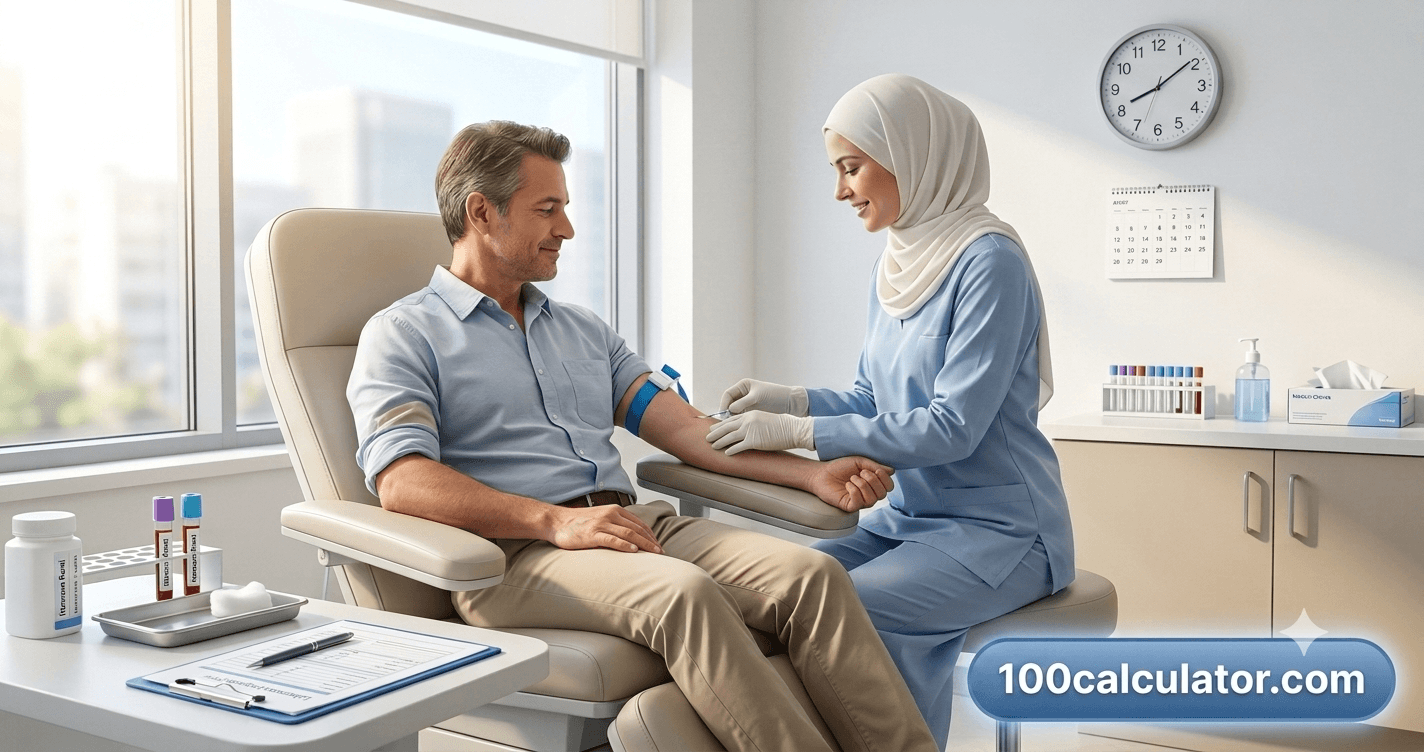
Because testosterone is highest in the early morning and drops through the day, an accurate test means a blood draw before 10 a.m., ideally fasted. A single low reading isn't usually enough for a diagnosis — a second morning test is standard practice, and the result is interpreted alongside your symptoms, not as a number in isolation.
Testosterone Replacement Therapy: A General Overview
Testosterone replacement therapy, or TRT, is meant for people with confirmed low testosterone and real symptoms, not as a general performance or anti-aging boost. There's no fixed age cutoff — a 35-year-old with confirmed low levels and clear symptoms can be a reasonable candidate, while a 60-year-old with borderline levels and no symptoms might not be. Younger men are usually evaluated more cautiously, partly because TRT can suppress natural sperm production, which matters if future fertility is a consideration.
Common TRT Delivery Methods
| Method | How Often | General Trade-offs |
|---|---|---|
| Injection | Typically weekly or every 1–2 weeks | Usually the most affordable option; levels can peak then dip between doses |
| Topical gel or cream | Daily | No needles, but requires daily application and carries a small risk of transferring testosterone to others through skin contact |
| Patch | Daily | Steady daily release; can cause skin irritation at the application site |
| Pellets | Every 3–6 months | Least day-to-day effort; requires a minor in-office procedure to insert |
| Nasal gel | Multiple times per day | Avoids skin transfer risk; requires more frequent dosing |
The right method usually comes down to cost, convenience, and how comfortable someone is with the trade-offs, which is a conversation worth having directly with a doctor rather than deciding alone.
Why More Isn't Better: Bodybuilding Doses and Health Risks
Some bodybuilders and performance-focused gym users take anabolic steroids, including testosterone itself, at doses reported to run roughly 10 to 50 times higher than a standard medical replacement dose — far beyond what any doctor would prescribe for low testosterone.
These supraphysiologic doses are linked to serious risks: structural heart changes, dangerously altered cholesterol, liver stress, mood and behavioral changes, and infertility that doesn't always fully reverse after stopping. (Cleveland Clinic) Using testosterone or anabolic steroids without a prescription is also illegal in many places. This isn't a safe or medically supervised way to build muscle, and it's a fundamentally different situation than a prescribed, monitored TRT dose for diagnosed low testosterone.
Natural Ways to Support Healthy Testosterone Levels
Before reaching for a supplement, it's worth ruling out the habits with the strongest research behind them first.
Lifestyle Factors That Help
Getting consistent, adequate sleep, maintaining a healthy body weight, strength training regularly, moderating alcohol, eating enough protein — see our protein intake guide if you're unsure how much you actually need — and managing chronic stress all have reasonably solid research support for maintaining healthy testosterone. Weight loss in particular has been shown to help reverse low testosterone linked to obesity, since excess body fat both lowers SHBG and increases the conversion of testosterone into estrogen.
What About Supplements?
Zinc and vitamin D supplements can meaningfully raise testosterone if a blood test shows an actual deficiency in one of them, but they don't reliably push levels above a normal baseline otherwise.
Ashwagandha has some modest supporting evidence, particularly in men under high stress, while popular ingredients like tribulus terrestris have little evidence behind them despite the marketing. The supplement industry isn't tightly regulated in most countries, and some testosterone products have been linked to liver injury, so it's worth talking to a doctor before starting anything, especially alongside other medications.
Related Calculators
Put what you just read into practice, try these free tools instantly, no sign-up required.
Fat Free Mass Index Calculator
Measure your lean muscle mass relative to height with FFMI.
Macro / Protein Calculator
Calculate your daily protein, carbs, and fat intake targets.
BAC Calculator (Blood Alcohol Concentration)
Estimate your blood alcohol concentration based on drinks consumed.
Free Bioavailable Testosterone Calculator Online
Calculate free and bioavailable testosterone levels from lab results.
Calorie Deficit Calculator for PCOS
Plan a sustainable calorie deficit tailored for managing PCOS.
Common Mistakes When Interpreting a Testosterone Test
Even with an accurate lab result, a few habits can quietly lead to the wrong conclusion. Here's what to watch for:
- Testing in the afternoon instead of the morning, when levels are naturally lower
- Diagnosing from a single draw instead of confirming with a second morning test
- Looking at total testosterone alone and ignoring SHBG when something doesn't add up
- Comparing your number to a friend's or an online forum post without checking units or the assay method
- Testing after poor sleep, heavy drinking, or illness, all of which can temporarily lower results
- Jumping straight to TRT before ruling out reversible causes like obesity, thyroid problems, sleep apnea, or medication side effects
Most of these are easy to avoid once you know what to look for, and avoiding them is often the difference between a confusing result and a genuinely useful one.
Medical disclaimer: This article is for general educational purposes only and isn't a substitute for professional medical advice, diagnosis, or treatment. Hormone levels, reference ranges, and treatment decisions vary from person to person, so always talk to a licensed healthcare provider before starting, stopping, or changing any medication, supplement, or hormone therapy.
Sources & References
This guide draws on general information from established medical and health resources, including:
- MedlinePlus (U.S. National Library of Medicine) — Testosterone Levels Test
- MedlinePlus — SHBG Blood Test
- Mayo Clinic Laboratories — Testosterone, Total, Bioavailable, and Free, Serum
- Cleveland Clinic — Hyperandrogenism
- Cleveland Clinic — Anabolic Steroids
Reference ranges and clinical guidance can change over time and vary between laboratories; always check the specific range and guidance provided by your own healthcare provider or lab report.
More From Common Health Guide
Still making sense of your lab results, body composition, or PCOS-related questions? These related guides dig deeper into the topics covered above.
Frequently Asked Questions
What is the difference between total, free, and bioavailable testosterone?
Total testosterone is every form of the hormone in your blood, whether it's attached to a protein or not. Free testosterone is only the small, unattached portion — commonly cited as roughly 1 to 3% of the total — that's immediately available to your cells. Bioavailable testosterone adds free testosterone to the portion loosely bound to a protein called albumin, since that bond releases quickly enough for your body to use it too. Bioavailable testosterone is generally considered the best single estimate of how much active hormone your body actually has on hand.
Which matters more: free testosterone or bioavailable testosterone?
In most people, free and bioavailable testosterone move together, and either one gives a useful picture. Some labs and clinicians prefer bioavailable testosterone because it tends to track closely with symptoms, especially in older men whose albumin levels can shift due to other health conditions. Free testosterone by direct immunoassay can also be less reliable than bioavailable testosterone testing. If your doctor has ordered one and not the other, that's usually a lab or clinic preference rather than a sign one number is being ignored.
Is free testosterone or total testosterone the better number to focus on?
Total testosterone is a reasonable starting point for most people and is usually checked first. It becomes less reliable when SHBG is unusually high or low, which happens with aging, thyroid problems, liver disease, obesity, or certain medications. In those situations, two people can have identical total testosterone but very different amounts of active hormone. That's when free or bioavailable testosterone becomes the more informative number, which is why doctors often order it as a follow-up rather than a replacement.
What is a good bioavailable testosterone level?
"Good" depends on your lab, your age, and your sex, since reference ranges vary meaningfully between testing methods. As a rough example, some labs report adult male bioavailable testosterone as normal between about 110 and 400 ng/dL, and adult female ranges are much lower, often around 1 to 19 ng/dL. A level within your lab's printed reference range, alongside an absence of symptoms like fatigue or low sex drive, is generally reassuring. Compare your result to the range on your own report rather than a number from elsewhere online.
Is a free testosterone level of 9.5 or a bioavailable level of 8.5 considered low?
It depends entirely on the unit and the lab. A free testosterone of 9.5 ng/dL falls within some commonly used adult male reference ranges, while 9.5 pg/mL would be very different and far lower. A bioavailable testosterone of 8.5 ng/dL would be low against a typical adult male range of roughly 110 to 400 ng/dL, but could be unremarkable for an adult woman, whose ranges run much lower. Always check the units and reference range printed directly on your own lab report rather than comparing raw numbers found online.
Is 400 total testosterone low?
For most adult men, no. Commonly cited reference ranges put adult male total testosterone somewhere between roughly 250 and 900 ng/dL depending on age and the lab, and 400 ng/dL typically sits comfortably inside that range. The American Urological Association generally defines low testosterone as a total testosterone under 300 ng/dL, confirmed with a repeat morning test and paired with symptoms. If you're seeing 400 ng/dL alongside fatigue or low libido, that combination — not the number alone — is worth discussing with a doctor.
What affects bioavailable testosterone levels?
The biggest factor is SHBG, the protein that locks testosterone away from your tissues. SHBG tends to rise with age, an underactive thyroid, liver disease, and certain medications, which lowers the bioavailable share even when total testosterone looks normal. SHBG tends to run lower with obesity and insulin resistance, which can raise the bioavailable percentage while often lowering total testosterone at the same time. Sleep, chronic stress, heavy alcohol use, and some medications, including opioids and glucocorticoids, can affect levels too.
How can I naturally increase bioavailable testosterone?
The habits with the most consistent research support are getting 7 to 9 hours of sleep, maintaining a healthy body weight, strength training regularly, moderating alcohol intake, and managing chronic stress, since elevated cortisol competes with testosterone production. If a blood test shows a genuine vitamin D or zinc deficiency, correcting it can help restore levels toward your normal baseline. These changes tend to help most when an underlying deficiency or unhealthy habit is the actual reason levels are low, rather than acting as a guaranteed boost for everyone.
Is high free or bioavailable testosterone a problem?
In men, a high reading is usually only flagged alongside symptoms like acne or aggression, or an underlying cause such as steroid use, and is far less commonly discussed than low testosterone. In women, elevated free or bioavailable testosterone is more common and is often linked to polycystic ovary syndrome (PCOS), which can also cause irregular periods, acne, or excess hair growth. A single high reading isn't automatically alarming, but a consistently elevated one paired with symptoms is worth bringing to a doctor.
Is bioavailable testosterone important for muscle growth?
Testosterone, including the bioavailable fraction, plays a real role in building and maintaining muscle, which is part of why levels are sometimes checked in people struggling to gain muscle despite consistent training and adequate protein. That said, for most people within a normal range, training program, protein intake, sleep, and consistency matter far more day to day than small differences in bioavailable testosterone. If you want to track lean mass over time, 100 Calculator's Fat Free Mass Index Calculator can help.
Does not ejaculating for a week really increase testosterone?
This idea traces back to a small 2003 study of 28 men that reported a temporary spike around day seven of abstinence — but that study was later retracted, has never been replicated, and never claimed the increase lasted. Other, more recent research has found no meaningful long-term difference in baseline testosterone based on ejaculation frequency, and some small studies even found testosterone rising briefly right after ejaculation rather than falling. There's no solid evidence that abstaining is a reliable way to raise your baseline testosterone.
Is 35 too early to consider testosterone replacement therapy?
There's no fixed age cutoff for TRT. Decisions are based on confirmed low testosterone on repeat morning blood tests, genuine symptoms, and a doctor's evaluation of other possible causes, not age alone. Younger men are usually evaluated more cautiously, partly because TRT can suppress natural sperm production and fertility, which matters more if future fertility is a consideration. If you're 35 with confirmed low levels and clear symptoms, TRT can be appropriate; if levels are normal or borderline without symptoms, a doctor may look at other explanations first.
What type of TRT delivery method is considered best?
There's no single best method — it depends on your priorities. Injections are usually the most affordable and produce the biggest swing in levels between doses. Gels and patches are needle-free but require daily application and carry a small risk of transferring testosterone to others through skin contact. Pellets, implanted every few months, need the least day-to-day effort but require a minor in-office procedure. Nasal gel is another option with a shorter dosing interval. Your doctor can help match the trade-offs to your routine.
How much testosterone do bodybuilders use, and is that safe?
Some bodybuilders and performance-focused gym users take anabolic steroids at doses reported to be roughly 10 to 50 times higher than a standard medical replacement dose, far beyond what any doctor would prescribe for low testosterone. These supraphysiologic doses are linked to serious risks, including heart enlargement, dangerous cholesterol changes, liver damage, infertility, and mood or behavioral changes, some of which don't fully reverse after stopping. Using testosterone or anabolic steroids without a prescription is also illegal in many places. This isn't a safe way to build muscle.
Do supplements marketed to increase testosterone actually work?
Mostly, only if you're deficient in something to begin with. Zinc and vitamin D supplements can meaningfully help testosterone if a blood test shows you're low in either, but they don't reliably push levels above your normal baseline. Ashwagandha has some modest supporting evidence, particularly in men dealing with high stress, while ingredients like tribulus terrestris have little evidence behind them. The supplement industry isn't tightly regulated, and some products have caused liver injury, so it's worth talking to a doctor before starting anything, especially if you take other medications.
About 100 Calculator
100 Calculator is a free hub of online calculators and educational guides covering health, finance, trading, crypto, education, and more. Every tool is built to be fast, accurate, and genuinely free, with no account or signup required.
We built this guide, and tools like the Free Bioavailable Testosterone Calculator referenced throughout it, to make lab results and hormone health a little easier to understand. Head back to the 100 Calculator homepage to explore the full library of tools, or learn more about the team behind them on our About Us page.