How PCOS Affects Calorie Needs and Weight Loss
Polycystic ovary syndrome changes how your body handles insulin, hormones, and fat storage, which is why standard calorie advice often falls short. Here's what's actually going on, and how to build a plan that works with your body instead of against it.
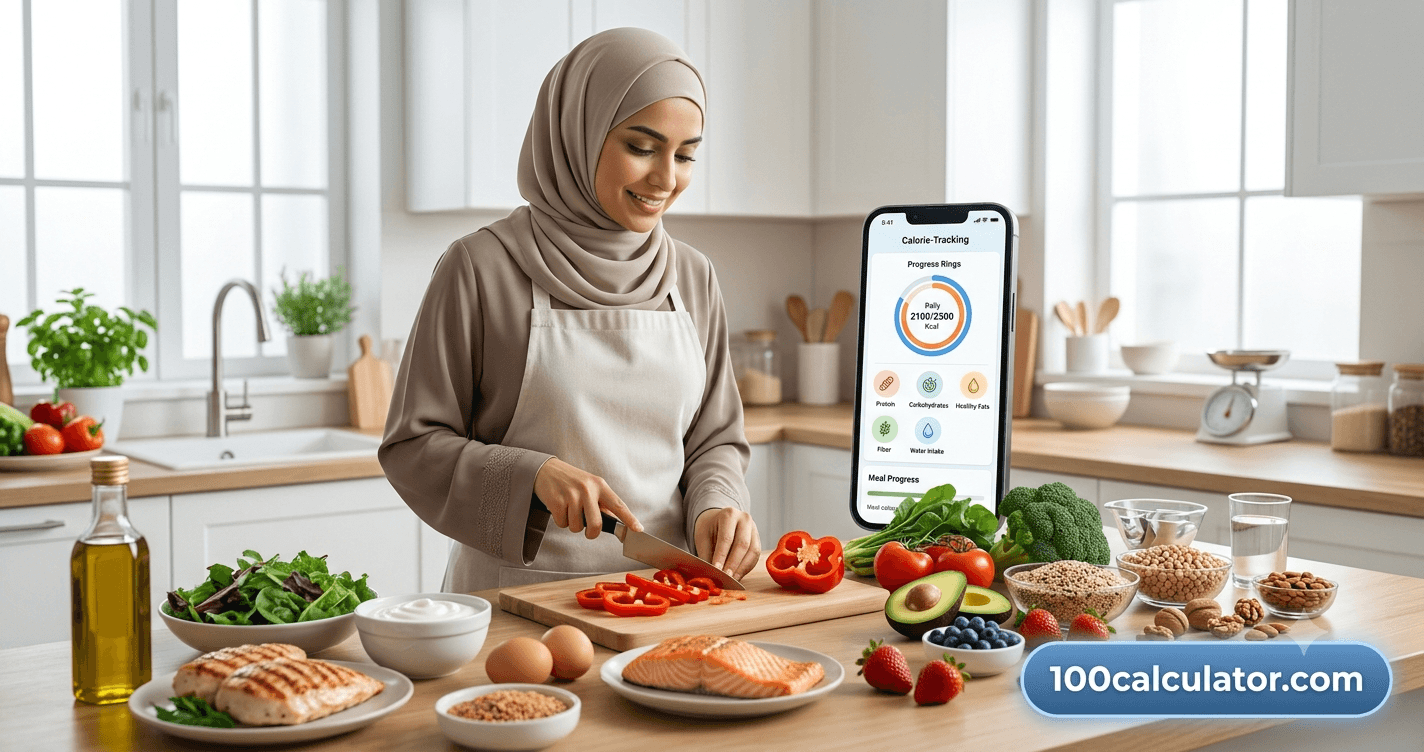
If you have polycystic ovary syndrome (PCOS) and feel like you're doing everything right but the scale won't move, you're not imagining it. PCOS changes how your body responds to insulin, stores fat, and burns energy at rest, so the standard "eat less, move more" math that works for a lot of people often doesn't add up the same way for you.
PCOS makes weight loss harder mainly because of insulin resistance: your cells respond less efficiently to insulin, your body compensates by producing more of it, and those higher insulin levels push your ovaries to make more androgens while encouraging your body to store fat, especially around your midsection. That's the short version. The longer version, covered in this guide, is that PCOS can also affect your resting metabolic rate and your hunger signals, both of which shape how many calories you actually need.
None of this means weight loss is impossible with PCOS. It means the approach usually needs to look a little different: more attention to protein and fiber, more strength training relative to pure cardio, and calorie targets that account for what's happening with your insulin rather than a generic number pulled from a standard formula. If you want a head start on the math, 100 Calculator's Calorie Deficit Calculator for PCOS is built around exactly this, factoring in PCOS-related metabolic changes instead of treating every body the same way.
This guide walks through why PCOS affects your calorie needs, how to think about a deficit that actually fits your body, and which foods, exercise habits, and supplements tend to help most.
What Is PCOS and How It Affects Weight
Polycystic ovary syndrome is a hormonal condition that affects how your ovaries work. According to the World Health Organization, PCOS affects an estimated 10 to 13 percent of women of reproductive age worldwide, and up to 70 percent of cases go undiagnosed. (WHO) It's one of the most common hormonal conditions in women, yet also one of the most misunderstood, partly because it looks different from person to person.
The name is a little misleading. You don't need ovarian cysts to have PCOS, and having cysts on your ovaries doesn't automatically mean you have it. What actually defines PCOS is a combination of hormone imbalances, most often higher-than-typical androgen levels, along with irregular ovulation.
The Hormones Behind PCOS
A few things tend to happen together in PCOS: the ovaries or adrenal glands produce more androgens than usual, the body doesn't respond normally to insulin, and ovulation becomes irregular or stops some months. These aren't separate problems. They feed into each other. Higher insulin levels push the ovaries to produce more testosterone, and that excess testosterone interferes with the normal release of an egg each month.
This is why PCOS shows up as such a wide mix of symptoms: irregular or missing periods, acne, extra hair growth on the face or body, thinning hair on the scalp, and, the focus of this guide, weight that's harder to shift than it seems like it should be. If bloodwork has flagged elevated testosterone for you, 100 Calculator's Free Bioavailable Testosterone Calculator can help you make sense of what those numbers mean.
How PCOS Is Diagnosed
Doctors most often use the Rotterdam criteria, which calls for at least two of three features: irregular or absent ovulation, signs of excess androgens (in bloodwork or through symptoms like acne and excess hair growth), and polycystic-appearing ovaries on ultrasound. (ACOG) You only need two of the three, which is part of why PCOS looks so different from one woman to the next. Someone with normal-looking ovaries on ultrasound can still have PCOS if the other two criteria are met.
Because irregular ovulation is one of those three criteria, tracking your cycle over a few months can help build a clearer picture before an appointment. Our guide to signs of an irregular menstrual cycle walks through what counts as irregular, and 100 Calculator's Period & Fertility Tracker can help you keep a simple running log.
| Phenotype | Features Present | What It Often Looks Like |
|---|---|---|
| A | Excess androgens, irregular ovulation, and polycystic ovaries | Usually the most pronounced symptoms and the strongest link to insulin resistance |
| B | Excess androgens and irregular ovulation | Hormonal symptoms without the ultrasound finding |
| C | Excess androgens and polycystic ovaries | Milder symptoms; cycles may look regular |
| D | Irregular ovulation and polycystic ovaries | Cycle and ultrasound findings without elevated androgens |
Why Losing Weight With PCOS Feels Harder
Weight loss comes down to calories in versus calories out, but PCOS changes several of the variables in that equation before you even start counting anything. Three mechanisms in particular make the process feel like an uphill climb.
Insulin Resistance and Weight Gain
Insulin resistance and the compensatory high insulin levels that come with it affect an estimated 65 to 70 percent of women with PCOS, and it's arguably the biggest single driver of PCOS-related weight gain. (ACOG) When your cells don't respond normally to insulin, your pancreas compensates by producing more of it. Those higher insulin levels do two things that work against weight loss: they signal your body to store more fat, particularly around the abdomen, and they push your ovaries to produce more androgens, which can intensify other PCOS symptoms and make the whole cycle harder to break.
Androgens and Fat Storage
Excess androgens don't just affect skin and hair. They also influence where your body tends to store fat, favoring the abdomen over the hips and thighs. This pattern is linked to a higher risk of insulin resistance and metabolic syndrome, which can make the cycle self-reinforcing: more androgens encourage more abdominal fat storage, and more abdominal fat can worsen insulin resistance.
Inflammation and Appetite Signals
Many women with PCOS also have low-grade, chronic inflammation, which research has linked to both insulin resistance and disrupted hunger and fullness signals. In practice, that can mean feeling hungry sooner after eating, or feeling less satisfied by meals that would keep someone without PCOS full for hours. This isn't a matter of willpower. It's a biological signal running a little differently than it otherwise would.
How PCOS Changes Your Calorie Needs
All of this adds up to a genuine difference in how your body uses energy, not just a difference in effort.
Resting Metabolic Rate and PCOS
Some research suggests that insulin resistance and the hormonal shifts involved in PCOS can modestly lower resting metabolic rate: the number of calories your body burns just keeping your heart beating, your lungs breathing, and your organs functioning. The effect isn't dramatic on its own, but combined with reduced satiety signals and a tendency to store more fat, it can be enough to make a "standard" calorie target feel too high.
Why Generic Calorie Calculators Can Fall Short
Most online calorie calculators are built around formulas like Mifflin-St Jeor or Harris-Benedict, which use your age, height, weight, and activity level to estimate calorie needs. Those formulas were developed using general population data, not data specific to insulin-resistant metabolisms, so the number they produce can end up being a rough starting point at best if you have PCOS.
A calorie target built with PCOS in mind starts from the same basic formulas but adjusts for the fact that insulin resistance changes how your body partitions energy between fat storage and fat burning. That's the gap 100 Calculator's Calorie Deficit Calculator for PCOS tries to close. It's built around the calorie and macronutrient patterns that tend to work better for insulin-resistant metabolisms, rather than assuming every body responds to a deficit the same way.
How to Calculate a Calorie Deficit for PCOS
You don't need to guess at this. Here's the general process, and then a faster way to get there.
- Estimate your maintenance calories. This is roughly how many calories you'd need daily to maintain your current weight, based on your age, height, weight, and activity level.
- Account for insulin resistance. If you have confirmed or suspected insulin resistance, many clinicians favor a moderate deficit of roughly 15 to 20 percent below maintenance rather than an aggressive one, since very low-calorie diets can raise stress hormones and potentially work against insulin sensitivity in the short term.
- Set your protein target first. Build your calorie target around a protein goal. Protein tends to support satiety and muscle mass better than an equivalent amount of carbohydrate or fat, and both of those matter for a metabolism already working against you.
- Reassess every few weeks. Track your weight trend, not day-to-day fluctuations, over two to three weeks and adjust your calorie target if progress stalls for a full month despite consistency.
Free Online Tool
Skip the manual math
100 Calculator's Calorie Deficit Calculator for PCOS walks through these same steps automatically. Enter your stats and activity level, and it estimates a calorie target and macro split adjusted for PCOS-related insulin resistance, so you're not relying on a generic formula that wasn't built with your metabolism in mind.
Our related guide on calorie deficit strategies for women with PCOS goes further into adjusting this target as your weight and habits change over time.
Best Foods for PCOS Weight Loss
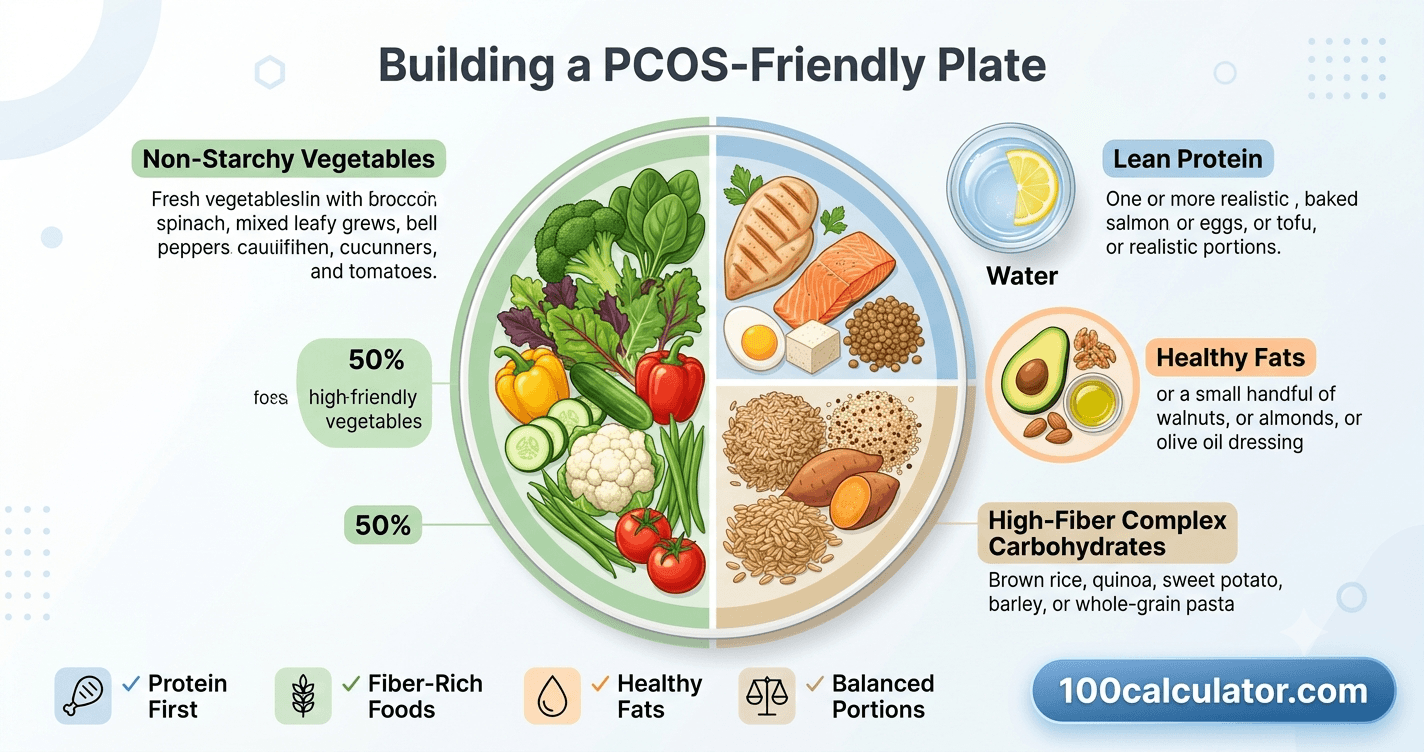
There's no single "PCOS diet." What consistently shows up across research and clinical guidelines, though, is that eating patterns which keep blood sugar more stable tend to work better than general calorie-cutting alone.
Prioritize Protein and Fiber
Protein and fiber both slow how quickly sugar enters your bloodstream after a meal, which means smaller insulin spikes and, often, longer-lasting fullness. Aiming for a source of protein and a source of fiber, whether that's vegetables, beans, or whole grains, at every meal is a simpler rule to follow day to day than tracking exact macros. For a more precise target based on your body and goals, 100 Calculator's Macro / Protein Calculator can help, and our guide on how to calculate your daily macro and protein needs breaks down how to apply that number to real meals.
Choose Lower-Glycemic Carbohydrates
Carbohydrates aren't the enemy, but the type matters more with PCOS than it might for someone without insulin resistance. Lower-glycemic carbs, the ones that raise blood sugar more slowly, tend to work better as a foundation.
| Instead Of | Try | Why It Helps |
|---|---|---|
| White rice | Quinoa, brown rice, or barley | More fiber slows digestion and softens the blood sugar spike |
| Sugary breakfast cereal | Eggs, Greek yogurt, or oats with nuts | Higher protein and fiber, less added sugar |
| White bread | Sourdough or 100% whole grain bread | Lower glycemic index and more fiber per slice |
| Fruit juice | Whole fruit | Fiber in whole fruit slows sugar absorption compared to juice |
| Regular pasta | Legume-based or whole wheat pasta | More protein and fiber per serving |
What a PCOS-Friendly Breakfast Looks Like
Breakfast gets singled out a lot in PCOS advice, and there's a reasonable explanation: what you eat first thing tends to set the tone for blood sugar swings the rest of the day. A breakfast built around 20 to 30 grams of protein, some fiber, and a smaller portion of refined carbohydrate, think eggs with vegetables, Greek yogurt with berries and nuts, or a protein smoothie with spinach, tends to keep blood sugar steadier than cereal or a plain pastry. This is part of the logic behind the viral "30-30-30" trend, which we cover in the FAQ section below.
Best Exercise for PCOS
Exercise matters for PCOS beyond burning calories. The right kind of movement can directly improve how your cells respond to insulin, sometimes within just a few weeks of consistent activity.
Strength Training
Building and maintaining muscle is one of the more underrated tools for PCOS, because muscle tissue is a major site of glucose uptake. More muscle generally means better blood sugar regulation, even without weight loss. Two to three strength sessions a week, covering the major muscle groups, is a reasonable starting point for most people. If you want to track how your body composition shifts as you build strength, 100 Calculator's Fat Free Mass Index Calculator gives you a way to look beyond the number on the scale, and our guide to fat free mass index explains why that number can matter more than weight alone.
Walking and Low-Intensity Movement
Walking doesn't get much credit, but it's genuinely useful for PCOS. Regular walking supports insulin sensitivity, and a short walk after meals, even just 10 to 15 minutes, has been shown in some studies to blunt the post-meal blood sugar spike compared with staying seated. It's also one of the easiest habits to actually stick with, which matters more than any single "optimal" workout.
Exercise to Approach With Caution
More isn't automatically better. Very high-intensity training done every day, without adequate recovery, can raise cortisol, and chronically elevated cortisol can work against the same insulin sensitivity you're trying to improve. This doesn't mean intense workouts are off-limits. It means balancing them with lower-intensity days and enough sleep, rather than assuming "harder" is always "more effective" for PCOS specifically.
Supplements That May Support PCOS Weight Loss
No supplement replaces diet, exercise, or medical treatment, but a few have enough research behind them to be worth discussing with your doctor.
Inositol
Myo-inositol, sometimes combined with D-chiro-inositol, is one of the more studied supplements for PCOS. Research on its effect on insulin sensitivity and ovulation is promising, though study quality varies, and current clinical guidelines don't list it as a first-line treatment. It's generally considered low-risk, which is part of why it's become popular, but low-risk isn't the same as proven, so it's worth thinking of it as a possible addition rather than a replacement for the basics.
Vitamin D and B12
Vitamin D deficiency shows up more often in women with PCOS than in the general population; recent research puts the prevalence at more than half in some analyses, and low vitamin D has been linked to worse insulin resistance in PCOS specifically. Vitamin B12 is also worth a mention if you take metformin, since long-term metformin use can gradually lower B12 levels. A simple blood test can tell you where you actually stand on both, which beats supplementing blind.
Omega-3 Fatty Acids
Omega-3 fatty acids, found in fatty fish, walnuts, and flaxseed, or taken as a supplement, are commonly recommended for their general anti-inflammatory effects, which may be relevant given the low-grade inflammation often seen in PCOS. The evidence here is less specific to PCOS than it is for inositol or vitamin D, but omega-3s are a reasonable, low-risk addition to a broader eating pattern.
Common PCOS Weight Loss Mistakes to Avoid
A few patterns come up again and again in women who feel stuck despite putting in real effort.
- Cutting calories too aggressively. Very low-calorie diets can raise cortisol and, over time, work against the same insulin sensitivity you're trying to improve. A moderate, sustainable deficit tends to hold up better than an extreme one.
- Doing cardio only and skipping strength work. Cardio burns calories in the moment, but muscle is what improves your baseline insulin sensitivity between workouts.
- Ignoring sleep. Poor sleep raises cortisol and can worsen insulin resistance almost as much as a poor diet can.
- Expecting the scale to move every week. PCOS-related water retention and hormone fluctuations can mask fat loss for weeks at a time, even when the underlying trend is genuinely downward.
- Treating every calorie source the same. A given number of calories from whole foods with adequate protein behaves differently in an insulin-resistant body than the same number from mostly refined carbohydrates.
- Going it alone when progress stalls for months, not weeks. If you've been consistent for 8 to 12 weeks with no movement at all, that's a reasonable point to loop in a doctor rather than cutting calories further on your own.
How Fast Should You Lose Weight With PCOS?
It's tempting to want fast results, especially after months of feeling like nothing works. But the research on PCOS specifically backs a slower, steadier pace, both because it's more sustainable and because it appears to be enough to meaningfully improve symptoms.
Research on PCOS and weight loss consistently points to one number worth knowing: losing just 5 to 10 percent of your body weight has been shown in multiple studies to help restore ovulation, lower androgen levels, and improve insulin sensitivity, even without reaching a "normal" BMI. That's a genuinely different goal than "get to my goal weight as fast as possible," and it's worth sitting with. For someone starting at 170 pounds, a 5 to 10 percent loss is roughly 8 to 17 pounds, not the 40 or 50 pounds many women assume they need before anything will change.
| Pace | Typical Rate | What to Know |
|---|---|---|
| Gradual (recommended) | 0.5–1 kg (1–2 lb) per week | Matches CDC guidance; linked to better long-term maintenance and less muscle loss |
| Aggressive / very low-calorie | More than 1 kg (2+ lb) per week | Higher risk of muscle loss, gallstones, and nutrient gaps; usually needs medical supervision |
| Medically supervised programs | Varies; sometimes faster short-term | Includes regular monitoring, which can make a faster pace safer than doing it alone |
The Centers for Disease Control and Prevention notes that people who lose weight at a gradual, steady pace of about 1 to 2 pounds a week are more likely to keep it off than people who lose weight quickly. (CDC) For PCOS specifically, slower loss also gives your insulin sensitivity time to actually improve alongside the number on the scale, rather than losing weight through extreme restriction, a method that can work against the same hormones you're trying to rebalance.
Medical Treatment Options for PCOS-Related Weight Gain
Lifestyle changes are the foundation of PCOS management, but they're not the only tool, and there's no extra credit for doing it without help if help would work better. A few medical options are worth knowing about, even if diet and exercise alone are the right starting point for you.
Metformin
Metformin is an insulin-sensitizing medication that has been used in PCOS management for decades, even though it's technically approved for type 2 diabetes rather than PCOS specifically. It won't cause dramatic weight loss on its own, but by improving how your body uses insulin, it can make diet and exercise changes more effective and may help regulate cycles for some women. Common side effects include stomach upset, which often improves with a slow dose increase or an extended-release version.
GLP-1 Medications Like Ozempic
GLP-1 medications such as semaglutide, sold as Ozempic for diabetes and Wegovy for weight management, work by slowing digestion and increasing feelings of fullness. They aren't FDA-approved specifically for PCOS, but doctors do prescribe them off-label for PCOS-related insulin resistance and weight management, and early research on their use in PCOS has been encouraging for weight loss and cycle regularity. Because these medications are relatively new to PCOS-specific use and aren't appropriate during pregnancy, they're a conversation to have directly with your doctor rather than something to pursue on your own.
Related Calculators
Put what you just read into practice, try these free tools instantly, no sign-up required.
Fat Free Mass Index Calculator
Measure your lean muscle mass relative to height with FFMI.
Macro / Protein Calculator
Calculate your daily protein, carbs, and fat intake targets.
BAC Calculator (Blood Alcohol Concentration)
Estimate your blood alcohol concentration based on drinks consumed.
Free Bioavailable Testosterone Calculator Online
Calculate free and bioavailable testosterone levels from lab results.
Calorie Deficit Calculator for PCOS
Plan a sustainable calorie deficit tailored for managing PCOS.
Building a PCOS Weight Loss Routine That Lasts
The plan that actually works is the one you can keep doing for months, not the one that looks most impressive for two weeks.
- Start with one change, not five. Pick protein at breakfast, a daily walk, or two strength sessions a week, not all three at once. Layer on more once the first one feels automatic.
- Track trends, not single days. If you weigh in at all, do it on the same day and time each week, and look at the direction over a month rather than any single number.
- Plan for hormone-driven fluctuations. Water retention and appetite can shift across your cycle even when it's irregular. A rough week on the scale doesn't undo a good month.
- Revisit your calorie target every 4 to 6 weeks. As you lose weight or build muscle, your calorie needs change. 100 Calculator's Calorie Deficit Calculator for PCOS takes a few minutes to rerun and keeps your numbers current.
- Loop in your support system. Whether that's a doctor, a dietitian, or someone who understands why "just eat less" isn't the whole story with PCOS, having someone in your corner makes consistency easier.
When to See a Doctor About PCOS and Your Weight
Weight is one piece of PCOS, not the whole picture, and it's worth checking in with a doctor at certain points regardless of what the scale says.
- You've never been formally diagnosed but suspect PCOS based on symptoms like irregular periods, acne, or excess hair growth
- You've been consistent with diet and exercise changes for 8 to 12 weeks with no change in weight, energy, or symptoms
- You're considering starting metformin, a GLP-1 medication, or a new supplement
- You notice signs of insulin resistance, like skin tags or dark, velvety patches of skin often at the neck or underarms
- You're trying to conceive and want to talk through how weight and PCOS interact with fertility
- You notice new or worsening symptoms, like significantly heavier periods, severe mood changes, or rapid weight gain that doesn't match your habits
A doctor familiar with PCOS, whether that's an endocrinologist, a reproductive endocrinologist, or a gynecologist with PCOS experience, can run bloodwork to check your insulin, glucose, and hormone levels, which gives you real numbers to work from instead of guessing.
Medical disclaimer: This article is for general educational purposes only and isn't a substitute for professional medical advice, diagnosis, or treatment. PCOS varies significantly from person to person, and calorie needs, safe weight loss rates, and treatment options should be discussed with a licensed healthcare provider familiar with your medical history.
More From Our Common Health Guide
Still exploring PCOS, body composition, or metabolic health? These related guides dig deeper into the topics covered above.
Frequently Asked Questions
Why is it so hard to lose weight with PCOS?
PCOS makes weight loss harder mainly through insulin resistance, which affects an estimated 65 to 70 percent of women with the condition. Higher insulin levels encourage fat storage, especially around the abdomen, and push the ovaries to produce more androgens, which can worsen other PCOS symptoms. Many women with PCOS also experience lower satiety after meals and, in some cases, a modestly reduced resting metabolic rate. None of this means weight loss is impossible; it means the standard calorie math often needs adjusting for how your body actually processes insulin and energy.
What is the 30-30-30 rule for PCOS?
The 30-30-30 rule is a social media trend that involves eating 30 grams of protein within 30 minutes of waking up, followed by 30 minutes of low-intensity exercise like walking. It wasn't designed specifically for PCOS and hasn't been rigorously studied as a complete method, but its two components, a protein-forward breakfast and morning movement, align with general PCOS advice for stabilizing blood sugar. It's reasonable to try, but it works better as one habit within a broader plan than as a stand-alone fix.
How much weight can I safely lose with PCOS in a month?
Health authorities like the CDC recommend losing weight at a gradual pace of about 1 to 2 pounds, roughly 0.5 to 1 kilogram, a week, which works out to about 4 to 8 pounds over a month for most adults. For PCOS specifically, research shows that even a 5 to 10 percent total body weight loss, achieved gradually, can meaningfully improve ovulation, androgen levels, and insulin sensitivity. Losing weight faster than this is possible but raises the risk of muscle loss and regain, and it's worth medical supervision if you're pursuing a faster pace.
What's the best breakfast for PCOS?
There's no single required breakfast, but one built around 20 to 30 grams of protein, a source of fiber, and a smaller portion of refined carbohydrate tends to keep blood sugar steadier than cereal or pastries alone. Eggs with vegetables, Greek yogurt with berries and nuts, or a protein smoothie with spinach are all reasonable options. The goal is slowing down how quickly sugar hits your bloodstream after eating, since that helps limit the insulin spikes that PCOS already makes harder to manage.
What's the best exercise for PCOS?
Most research points to a combination rather than one single best option: strength training two to three times a week to build muscle, which improves insulin sensitivity even without weight loss, plus regular low-intensity movement like walking most days. Higher-intensity cardio has benefits too, but it works best alongside strength work and adequate recovery rather than replacing it entirely. The most effective exercise for PCOS is ultimately the combination you can actually keep doing consistently for months, not just a few weeks.
What exercises should someone with PCOS avoid?
There's no exercise that's strictly off-limits for most women with PCOS, but very high-intensity training done daily without recovery can raise cortisol, which may work against the insulin sensitivity you're trying to improve. This doesn't mean intense workouts are bad; it means balancing them with lower-intensity days, strength training, and enough sleep, rather than assuming more intensity always equals better results. If you have other health conditions alongside PCOS, ask your doctor about anything you should modify or avoid.
Does walking after eating help with PCOS?
It can. Some research suggests a short walk of 10 to 15 minutes after a meal helps blunt the post-meal blood sugar spike compared with staying seated, which is relevant for PCOS given how closely insulin and blood sugar are tied to symptoms. It's a low-effort habit that doesn't require special equipment or a gym, which also makes it one of the easier PCOS-friendly habits to stick with long-term.
Is 10,000 steps a day good for PCOS?
10,000 steps a day is a reasonable, well-known activity target, and regular walking does support insulin sensitivity, which makes it a genuinely useful habit for PCOS. That said, 10,000 is a round marketing number rather than a scientifically required threshold; consistent daily movement, even at a lower step count, still provides real benefits. If you're currently far from 10,000, building up gradually is more sustainable than jumping straight to it and burning out.
How much added sugar is okay if you have PCOS?
There's no PCOS-specific added sugar limit, but the American Heart Association's general guidance suggests women keep added sugar under about 25 grams, or 6 teaspoons, a day, which is a reasonable starting point given how closely added sugar is tied to blood sugar spikes. Since insulin resistance is central to most PCOS symptoms, many women notice that reducing added sugar, especially from drinks and processed snacks, makes blood sugar swings and energy crashes feel less intense, even before any weight changes.
What vitamins are commonly low in people with PCOS?
Vitamin D deficiency is especially common in PCOS; recent research estimates that more than half of women with PCOS may have low levels, and low vitamin D has been linked to worse insulin resistance in this group. Vitamin B12 is also worth monitoring if you take metformin, since long-term use can gradually lower B12 levels. A simple blood test can check both, which is more reliable than supplementing without knowing your actual levels first.
Is there a link between PCOS and thyroid conditions like Hashimoto's?
Research has found that autoimmune thyroid conditions, including Hashimoto's thyroiditis, appear more often in women with PCOS than in women without it, though the exact relationship isn't fully understood and doesn't affect every woman with PCOS. Because thyroid problems can also cause weight changes, fatigue, and irregular periods, symptoms that overlap heavily with PCOS, it's worth asking your doctor for a thyroid panel alongside your PCOS workup, especially if standard PCOS treatment isn't improving your symptoms as expected.
Does PCOS qualify you for Ozempic?
Ozempic (semaglutide) is FDA-approved for type 2 diabetes, not specifically for PCOS, so having PCOS alone doesn't automatically qualify you for a prescription. That said, doctors do prescribe GLP-1 medications like Ozempic off-label for PCOS-related insulin resistance and weight management, and early research on this use has been encouraging. Whether it's appropriate depends on your individual health profile and other factors your doctor will weigh, so it's a conversation to have directly with a healthcare provider rather than something to request based on a diagnosis alone.
Can PCOS go back to normal, or is it something you manage for life?
PCOS is generally considered a lifelong, chronic condition rather than something that's cured, but that doesn't mean symptoms stay fixed. Many women see real improvement in ovulation, androgen levels, and insulin sensitivity with weight loss, diet changes, exercise, or medication, sometimes enough that periods become regular and symptoms become mild or barely noticeable. The underlying hormonal tendency typically remains, though, which is why ongoing management, rather than a one-time fix, tends to be the more accurate way to think about it.
Why is PCOS sometimes difficult to diagnose?
PCOS is diagnosed using the Rotterdam criteria, which requires only two of three features (irregular ovulation, signs of excess androgens, or polycystic ovaries on ultrasound), so two women with PCOS can have quite different symptoms and test results. Symptoms also overlap with other conditions, including thyroid disorders, so ruling those out takes additional testing. On top of that, the World Health Organization estimates up to 70 percent of PCOS cases worldwide go undiagnosed, partly because symptoms like irregular periods or acne are sometimes dismissed rather than investigated.
About 100 Calculator
100 Calculator is a free hub of online calculators and educational guides covering health, finance, trading, crypto, education, and more. Every tool is built to be fast, accurate, and genuinely free, with no account or signup required.
We built this guide, and tools like the Calorie Deficit Calculator for PCOS referenced throughout it, to make a genuinely confusing topic a little easier to navigate. Head back to the 100 Calculator homepage to explore the full library of tools, or learn more about the team behind them on our About Us page.