What Is Bioavailable Testosterone and Why It Matters
A plain-language walkthrough of what bioavailable testosterone actually measures, how it differs from free and total testosterone, what typical ranges look like for men and women, and what your results might mean.
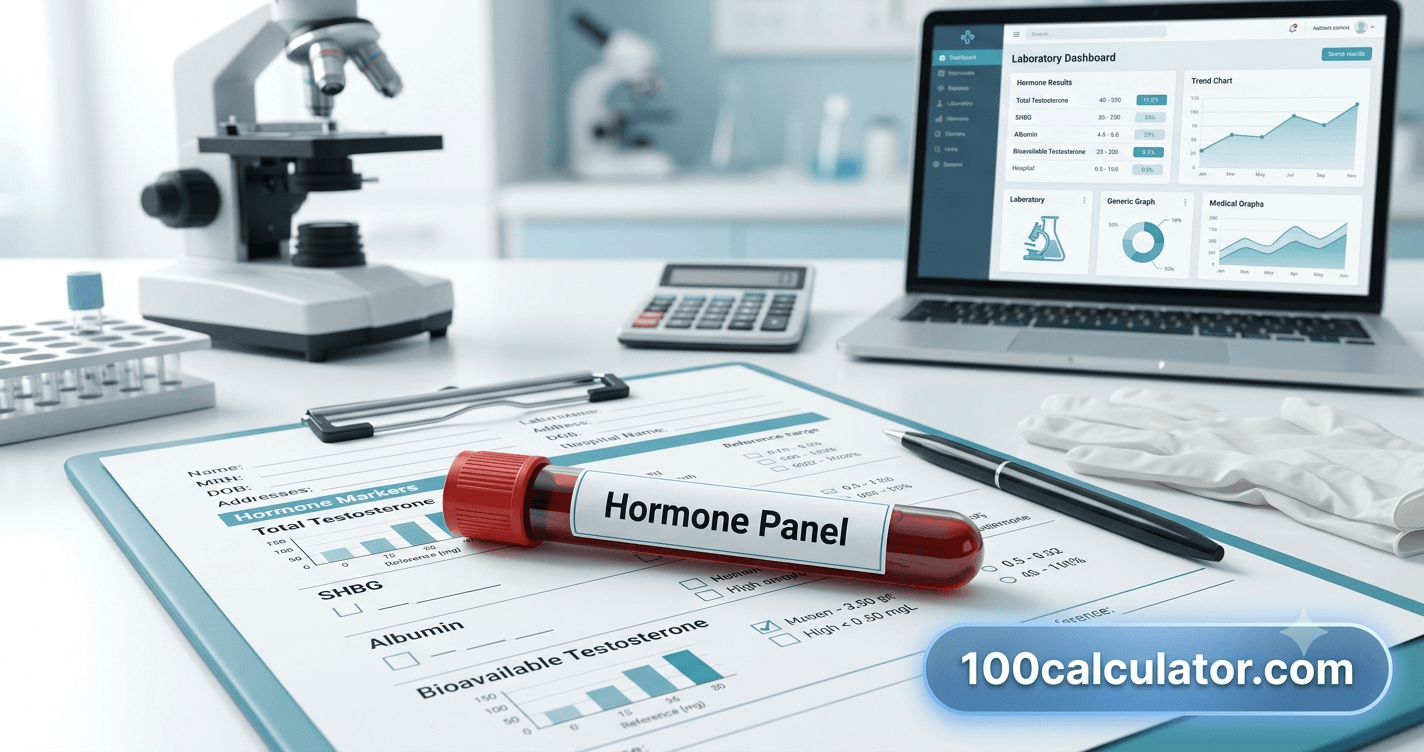
If you've had a testosterone blood panel done recently, you may have noticed it includes more than one number. Alongside "total testosterone," there's often a second or third figure labeled free testosterone or bioavailable testosterone, usually reported in much smaller units. That extra detail exists for a good reason, and understanding it can change how you read your own results.
Bioavailable testosterone is the portion of your total testosterone that your body can actually put to use, made up of testosterone that's unbound (free) plus testosterone loosely attached to a protein called albumin. It leaves out testosterone that's tightly bound to sex hormone-binding globulin, or SHBG, which stays locked away and biologically inactive. Because of this, two people can have identical total testosterone results and still have very different amounts of usable testosterone in their system.
This matters for everyday things like energy, mood, muscle, and sex drive, and it's especially useful for spotting problems that a total testosterone number alone can hide. If you want a quick estimate based on your own lab values, 100 Calculator's Free Bioavailable Testosterone Calculator Online does the math for you in seconds.
In this guide, we'll walk through what bioavailable testosterone means, how it compares to free and total testosterone, what typical ranges look like for men and women, and the everyday habits that genuinely affect testosterone versus the ones that are mostly myth. First, it helps to understand how testosterone actually moves through your bloodstream.
Total, Free, and Bioavailable Testosterone: The Basics
Testosterone is the main sex hormone produced by the testicles in men and, in much smaller amounts, by the ovaries and adrenal glands in women. It supports muscle mass, bone strength, red blood cell production, sex drive, and mood in both sexes, even though men naturally carry far more of it.
Once testosterone is released into your bloodstream, it doesn't just float around freely. Most of it attaches itself to carrier proteins almost immediately, and how tightly it attaches determines whether your body can actually use it.
How Testosterone Travels in Your Blood
Roughly half to two-thirds of the testosterone in your blood binds tightly to sex hormone-binding globulin (SHBG), a protein made by the liver. Testosterone stuck to SHBG is essentially in storage: it isn't available for your tissues to use unless it detaches, which doesn't happen easily.
Most of the remaining testosterone binds loosely to a different protein called albumin. This bond is weak enough that the testosterone can detach and become active fairly easily when tissues need it. A small remainder, typically only 1% to 3% of the total, isn't bound to anything at all. That unbound portion is called free testosterone.
Why Total Testosterone Doesn't Tell the Whole Story
Total testosterone adds up all three forms: SHBG-bound, albumin-bound, and free. That's useful as a first check, but it can be misleading on its own whenever SHBG levels are unusually high or low.
Picture two men who both test at a total testosterone of 500 ng/dL. One has an average SHBG level, so a healthy share of his testosterone is bioavailable. The other has unusually high SHBG, which can happen with age, liver conditions, or thyroid activity, so more of his testosterone stays locked away and inactive. Their total testosterone numbers look identical, but the second man may have noticeably lower bioavailable testosterone and could feel symptoms of low testosterone despite a "normal" total result. This is exactly the kind of gap that bioavailable testosterone is designed to catch.
What Is Bioavailable Testosterone?
Bioavailable testosterone is defined as the free testosterone plus the albumin-bound testosterone in your blood — in other words, every form of testosterone that isn't locked to SHBG. It's meant to represent the testosterone your tissues can realistically draw on, not just what's circulating in total.
Many clinicians consider it a more clinically useful number than total testosterone alone, particularly when SHBG is abnormal. It isn't measured as often as total testosterone in routine checkups, mainly because it takes an extra calculation step and isn't standardized the same way across every lab.
How Bioavailable Testosterone Is Calculated
Bioavailable testosterone isn't usually measured directly. Instead, it's calculated from three values already available on a standard hormone panel: total testosterone, SHBG, and albumin. If albumin wasn't tested, many calculators use a typical adult default value instead.
The most widely used method is the Vermeulen equation, developed by endocrinologist Alex Vermeulen and colleagues in 1999. It applies the law of mass action to model how testosterone distributes itself between SHBG, albumin, and the free fraction, based on how strongly each protein binds testosterone. You don't need to understand the math to use it — that's exactly what a calculator is for — but it helps to know the estimate is built on a well-established, peer-reviewed method rather than a rough guess.
Bioavailable vs. Free Testosterone: Are They the Same?
Not quite, though they're closely related and often confused. Free testosterone is only the completely unbound portion. Bioavailable testosterone is a broader category that includes free testosterone plus the albumin-bound portion. Every free testosterone value is part of bioavailable testosterone, but bioavailable testosterone also counts more than free testosterone does.
In practice, both numbers tend to move in the same direction. If your free testosterone is low, your bioavailable testosterone usually is too, since they share the same underlying SHBG relationship. For a deeper side-by-side comparison, our guide on free vs. total vs. bioavailable testosterone breaks down exactly when each measurement is used.
Free vs. Bioavailable vs. Total Testosterone: Key Differences
Seeing all three side by side makes the distinctions easier to remember. Here's how they compare:
| Measurement | What It Includes | Approximate Share of Total |
|---|---|---|
| Total testosterone | SHBG-bound + albumin-bound + free testosterone | 100% |
| Bioavailable testosterone | Albumin-bound + free testosterone | Roughly 30–40% |
| Free testosterone | Unbound testosterone only | Roughly 1–3% |
Total testosterone is the easiest and cheapest to test, which is why it's usually the first number checked. Free testosterone is the most "active" measurement but is technically difficult to measure directly with accuracy, since the amount involved is so small. Bioavailable testosterone sits in between: it's calculated rather than measured directly, but it's generally considered more reliable than free testosterone alone and more clinically meaningful than total testosterone alone, especially when SHBG is out of the ordinary.
Why Bioavailable Testosterone Matters
Testosterone influences far more than sex drive. Research has linked healthy testosterone levels to benefits across sexual function, bone health, muscle strength, and mood. Since bioavailable testosterone reflects what your tissues can actually access, it's a more direct indicator of these effects than total testosterone alone.
Muscle Growth and Physical Strength
Testosterone is one of the main drivers of muscle protein synthesis, the process your body uses to build and repair muscle tissue. It binds to androgen receptors inside muscle cells to trigger this process, and only testosterone that's bioavailable can reach those receptors in the first place. Someone with low bioavailable testosterone may find it harder to build or hold onto muscle, even with consistent training and enough protein in their diet.
If you're tracking muscle-building progress, 100 Calculator's Fat Free Mass Index Calculator can help you monitor lean mass changes over time alongside your hormone panel.
Energy, Mood, and Mental Clarity
Low bioavailable testosterone is commonly associated with fatigue, low motivation, irritability, and difficulty concentrating. A 2025 systematic review found that testosterone therapy in men with confirmed low levels was linked to modest improvements in mood, particularly reductions in depressive symptoms, along with benefits to sexual function and bone health. Correlation isn't the same as guaranteed cause and effect for every individual, but the connection between testosterone and how you feel day to day is well documented.
Bone Health and Long-Term Wellness
Testosterone helps maintain bone density in both men and women, partly directly and partly because some of it converts into estrogen, which also protects bone. Chronically low bioavailable testosterone over many years is linked to a higher risk of osteoporosis and fractures, which is one reason doctors take persistently low results seriously rather than dismissing them as a normal part of aging.
Normal Bioavailable Testosterone Ranges
There's no single universal number that counts as "normal," since reference ranges depend on the lab, the assay method used, your age, and your sex. That said, most labs' ranges fall into a broadly similar ballpark, shown below.
| Measurement | Typical Adult Male Range | Typical Adult Female Range |
|---|---|---|
| Total testosterone | ~300–1,000 ng/dL | ~15–70 ng/dL |
| Bioavailable testosterone | ~110–575 ng/dL | Often under 10 ng/dL |
| Free testosterone | ~5–21 ng/dL | ~0.3–1.9 ng/dL |
Typical Ranges for Men
For adult men, total testosterone below roughly 300 ng/dL is the threshold most commonly used to flag low testosterone, though some labs use slightly different cutoffs. Bioavailable testosterone tends to track total testosterone fairly closely in men with typical SHBG levels, but the two can diverge noticeably in older men or those with liver or thyroid conditions that raise SHBG.
Typical Ranges for Women
Total testosterone levels in women are naturally much lower than in men, generally somewhere in the range of 15 to 70 ng/dL, though this shifts somewhat across the menstrual cycle. Bioavailable and free testosterone in women are correspondingly small numbers, which is why results in the single digits are completely normal for women even though the same number would be far too low for a man.
Bioavailable Testosterone in Women
Testosterone isn't just a "male hormone." Women produce smaller amounts in the ovaries and adrenal glands, and it plays a real role in sex drive, energy, mood, and muscle and bone strength. Most of a woman's testosterone eventually converts into estradiol, the main female sex hormone, but the testosterone itself still matters along the way.
What Counts as High Bioavailable Testosterone in Women
Because normal ranges for women sit so much lower than for men, even a modest rise in total testosterone can translate into a proportionally large jump in bioavailable and free testosterone. This usually happens when SHBG drops, since lower SHBG means more testosterone is left bioavailable even without a big change in total testosterone.
Common signs of high bioavailable testosterone in women include:
- Excess hair growth on the face, chest, or abdomen (hirsutism)
- Persistent acne, especially along the jawline
- Thinning hair at the scalp or crown
- Irregular, infrequent, or absent periods
- Difficulty losing weight, particularly around the midsection
PCOS and Elevated Testosterone
Polycystic ovary syndrome (PCOS) is by far the most common cause of elevated testosterone in women, commonly cited as affecting roughly 6% to 12% of women of reproductive age. PCOS often lowers SHBG, which leaves more testosterone bioavailable even when total testosterone only rises modestly. That's why free and bioavailable testosterone are sometimes more revealing than total testosterone when doctors are checking for PCOS.
If elevated testosterone is affecting your weight or metabolism, 100 Calculator's Calorie Deficit Calculator for PCOS can help you build a nutrition plan suited to your situation, and our guide on how PCOS affects calorie needs and weight loss goes deeper into the connection between insulin resistance and androgen levels.
Symptoms and Causes of Low Bioavailable Testosterone
Low bioavailable testosterone can develop gradually, which is part of why it's often missed until symptoms have been building for a while.
Common Symptoms to Watch For
- Lower sex drive and, in men, erectile changes
- Persistent fatigue or low motivation
- Loss of muscle mass or strength
- Increased body fat, especially around the waist
- Low mood, irritability, or trouble focusing
- Disrupted sleep
- Thinning body hair or, over time, reduced bone density
Many of these symptoms overlap with other common conditions, including thyroid disorders, depression, and sleep apnea. That overlap is exactly why a blood test, not symptoms alone, is needed to confirm low testosterone.
What Causes Bioavailable Testosterone to Drop
Testosterone naturally declines by about 1% to 2% per year starting around age 30, so some drop with age is expected. Beyond aging, common contributors include obesity, poorly controlled type 2 diabetes, chronic illness, obstructive sleep apnea, certain medications, heavy or long-term alcohol use, and conditions affecting the testicles, pituitary gland, or hypothalamus directly.
Excess body fat is a particularly notable factor, because fat tissue contains an enzyme called aromatase that converts testosterone into estrogen. More body fat generally means more of this conversion, which can create a cycle where lower testosterone makes fat gain easier, and fat gain further lowers testosterone. Research also links poor sleep to reduced testosterone: in one well-known study, healthy young men who slept under five hours a night for a week saw testosterone levels drop by 10% to 15%, roughly equivalent to the decline expected from ten to fifteen years of aging.
Symptoms of High Bioavailable Testosterone
High bioavailable or free testosterone is less commonly discussed than low levels, but it's worth recognizing too, since the symptoms and likely causes differ quite a bit between men and women.
In Men
In men, naturally high testosterone rarely causes obvious symptoms on its own. When bioavailable or free testosterone is markedly elevated, it's more often tied to testosterone supplementation, anabolic steroid use, or less commonly, a testosterone-producing tumor, and can show up as acne, aggression or mood changes, sleep disruption, or an unusually high red blood cell count.
In Women
In women, elevated bioavailable or free testosterone is more common and is most often linked to PCOS, as covered above. Along with the visible symptoms like hirsutism and acne, women with high testosterone often have some degree of insulin resistance, which can make weight management more difficult and is part of why PCOS is managed with both hormone-focused and metabolic-focused approaches.
How to Calculate Your Bioavailable Testosterone
You don't need to run the Vermeulen equation by hand. What you need is the right lab values and a calculator built on that formula.
What You'll Need Before You Calculate
- Total testosterone, usually reported in ng/dL or nmol/L.
- SHBG (sex hormone-binding globulin), usually reported in nmol/L. This is sometimes left off a basic panel, so you may need to specifically ask your doctor to include it.
- Albumin, usually reported in g/dL, often already included on a standard metabolic panel. If it wasn't tested, a typical adult default value can be used instead.
Free Online Tool
Already have your lab values?
100 Calculator's Free Bioavailable Testosterone Calculator runs right in your browser. Enter your total testosterone, SHBG, and albumin, and it estimates your bioavailable and free testosterone instantly, with no account required.
Reading Your Result
Once you have a number, compare it against your own lab's reference range rather than a number you saw online, since ranges genuinely vary. A result near the middle of the range is generally reassuring. A result near either edge is worth discussing with a doctor, especially if it lines up with symptoms you've been noticing. Remember that any online calculator, including ours, is an educational estimate and not a diagnostic tool.
Natural Ways to Support Healthy Testosterone Levels
Genetics and age set a baseline you can't fully control, but several everyday habits have real research behind them for supporting healthy testosterone. Others, despite being popular online, don't hold up nearly as well.
Exercise and Strength Training
Resistance training, especially compound exercises that use large muscle groups like squats, deadlifts, and leg presses, is linked to short-term increases in testosterone and appears to support healthier levels over time with consistent training. The effect tends to be smaller with exercises that isolate small muscle groups, and some research on very high-volume endurance training has actually linked it to lower resting testosterone. A single bodyweight exercise, like doing a hundred pushups a day, is unlikely to move the needle much on its own — it's the overall pattern of regular, reasonably heavy strength training that matters most.

Sleep and Stress Management
Testosterone production is closely tied to sleep, with levels rising overnight and peaking around waking. Chronic sleep restriction has been shown in research to meaningfully reduce testosterone, and chronic stress raises cortisol, which can interfere with the same hormonal signals that drive testosterone production. Prioritizing consistent, adequate sleep is one of the more evidence-backed things you can do for your hormone levels, alongside finding sustainable ways to manage ongoing stress.
Heavy or long-term alcohol use is another factor worth being mindful of, since it can directly affect the testosterone-producing cells in the testicles over time. If you like to keep track of your drinking, 100 Calculator's BAC Calculator can help you stay aware of how much you've had.
Diet and Body Composition
Because excess body fat lowers testosterone through the aromatase pathway described earlier, gradual, sustainable weight loss in people who are overweight is one of the more reliable ways to support healthier testosterone levels. Getting enough protein supports both muscle maintenance and general metabolic health, though there's no evidence that any single "testosterone-boosting" food or supplement works as well as marketing often suggests. 100 Calculator's Macro / Protein Calculator can help you set realistic daily targets as part of a broader plan, and our guide to calculating your daily macro and protein needs walks through the details.
Sexual Activity and Testosterone: Separating Myth From Fact
A popular claim online says that avoiding ejaculation for seven days, sometimes called semen retention, produces a large testosterone spike. That claim traces back to a small 2003 study of 28 men that reported testosterone peaking at about 146% of baseline levels on day seven of abstinence — roughly a 46% increase, not the much larger jump the figure is often misquoted as. That specific study was later retracted for overlapping with a previously published paper by the same authors, and its finding has never been independently replicated, so it shouldn't be treated as solid evidence on its own.
Other small studies on longer periods of abstinence have found modest, inconsistent effects, and researchers broadly agree this remains an understudied area. Short-term hormonal fluctuations tied to arousal do happen, but current evidence doesn't support the idea that ejaculation frequency, whether daily or rare, produces a lasting change in your baseline testosterone. Choosing to masturbate often, occasionally, or not at all is a personal decision rather than a proven hormone strategy in either direction.
Related Calculators
Put what you just read into practice, try these free tools instantly, no sign-up required.
Fat Free Mass Index Calculator
Measure your lean muscle mass relative to height with FFMI.
Macro / Protein Calculator
Calculate your daily protein, carbs, and fat intake targets.
BAC Calculator (Blood Alcohol Concentration)
Estimate your blood alcohol concentration based on drinks consumed.
Free Bioavailable Testosterone Calculator Online
Calculate free and bioavailable testosterone levels from lab results.
Calorie Deficit Calculator for PCOS
Plan a sustainable calorie deficit tailored for managing PCOS.
When to Consider Testosterone Replacement Therapy (TRT)
Testosterone replacement therapy can meaningfully help people with confirmed low testosterone and matching symptoms, but it isn't something to start based on a single number or a feeling of being run-down.
Signs TRT Might Be Worth Discussing
The Endocrine Society recommends diagnosing low testosterone only when a person has both consistent symptoms of testosterone deficiency and unequivocally low levels, confirmed on at least two separate morning blood tests rather than a single result. Routine screening for low testosterone in people without symptoms isn't generally recommended, since testing without a clear reason tends to lead to more confusion than clarity.
Age and TRT: Is There a "Right" Time?
Age by itself isn't the deciding factor for TRT, in either direction. Medical guidelines focus on documented symptoms plus confirmed lab results, not birthdays, which means a 35-year-old with genuine symptoms and repeatedly low testosterone can be a reasonable candidate, just as a 65-year-old with normal levels typically isn't. TRT also carries potential risks and trade-offs, including effects on fertility, that are worth a full conversation with a doctor rather than a quick decision.
When to See a Doctor About Your Testosterone Levels
A single unusual result isn't necessarily a reason to worry, but certain patterns are worth bringing to a healthcare provider.
- Persistent fatigue, low libido, or mood changes that don't have an obvious explanation
- Noticeable, unexplained loss of muscle mass or strength
- New or worsening hirsutism, acne, or hair thinning in women
- Irregular or absent periods without another clear cause
- A lab result well outside your lab's reference range, especially if it's repeated
- Symptoms severe enough to interfere with daily life, work, or relationships
A doctor can order the right combination of tests, interpret your bioavailable testosterone in the context of your specific lab's reference range, and check for underlying causes like thyroid dysfunction, sleep apnea, or PCOS that a testosterone number alone won't reveal.
Medical disclaimer: This article is for general educational purposes only and isn't a substitute for professional medical advice, diagnosis, or treatment. Testosterone reference ranges vary by lab, age, and individual health status, so always talk to a licensed healthcare provider about your specific lab results, symptoms, or before starting any hormone therapy.
Sources & References
This guide draws on clinical guidance and research from the following organizations:
More From Common Health Guides
Still building your knowledge of hormones, body composition, and everyday health metrics? These related guides dig deeper into topics covered above.
Frequently Asked Questions
What is bioavailable testosterone in simple terms?
Bioavailable testosterone is the portion of testosterone in your blood that your body can actually use. It includes testosterone that's floating freely (unbound) plus testosterone loosely attached to a protein called albumin, which detaches easily when tissues need it. It does not include testosterone bound tightly to sex hormone-binding globulin (SHBG), which stays locked away and inactive. Many clinicians consider bioavailable testosterone a more useful number than total testosterone alone, especially when SHBG levels are unusually high or low.
What's the difference between free testosterone and bioavailable testosterone?
Free testosterone is testosterone that isn't attached to any protein at all, usually only about 1% to 3% of your total testosterone. Bioavailable testosterone is a broader measure that includes free testosterone plus the testosterone loosely bound to albumin, which can detach and become active fairly easily. In other words, free testosterone is a subset of bioavailable testosterone. Bioavailable testosterone is generally seen as the more complete picture of what your tissues can actually draw on.
Is bioavailable testosterone the same as total testosterone?
No. Total testosterone adds up every form of testosterone in your blood: the testosterone tightly bound to SHBG, the testosterone loosely bound to albumin, and free testosterone. Bioavailable testosterone only counts the albumin-bound and free portions, leaving out the SHBG-bound testosterone your body can't readily use. Two people can have identical total testosterone but very different bioavailable testosterone if their SHBG levels differ, which is why doctors sometimes look past the total number.
What should my bioavailable testosterone level be?
There's no single "correct" number, since reference ranges vary by lab, age, and sex. For adult men, many labs consider roughly 110 to 575 ng/dL a typical range, while adult women typically fall much lower, often under 10 ng/dL. What matters most is where your result sits within your own lab's reference range, alongside whether you're experiencing any symptoms. A doctor can help you interpret your specific result in that context rather than comparing it to a number from the internet.
Why do bioavailable and free testosterone results look like such small numbers?
Free and bioavailable testosterone are reported in much smaller units than total testosterone because they represent only a slice of the total amount circulating in your blood. A result like 8.5 or 9.5 isn't automatically low or high on its own — it depends entirely on which measurement it's from and what units and reference range your specific lab uses. A bioavailable testosterone result in the single digits could be perfectly typical for a woman but far below the normal range for a man, so context always matters more than the raw number.
Is a testosterone level of 400 low?
For an adult man, a total testosterone level of 400 ng/dL generally falls within the typical range, which most labs place somewhere between roughly 300 and 1,000 ng/dL. It's on the lower-middle side rather than a level doctors would usually flag as low. That said, "normal" on paper doesn't always match how someone feels, and a person with a level around 400 who has clear symptoms of low testosterone is still worth discussing with a doctor.
What is considered a dangerously low testosterone level?
There isn't one universal cutoff, but many doctors pay closer attention when total testosterone drops below 200 ng/dL on repeated morning blood tests, especially alongside symptoms like severe fatigue, low libido, or muscle loss. Levels below 300 ng/dL are commonly used as the general threshold for low testosterone in adult men. Very low levels combined with symptoms are worth prompt medical attention rather than a wait-and-see approach, since the underlying cause can sometimes need treatment beyond testosterone itself.
What are the symptoms of low bioavailable testosterone?
Common symptoms include low sex drive, fatigue, reduced muscle mass and strength, increased body fat, low mood or irritability, trouble concentrating, and sleep disturbances. Some people also notice thinning body hair or a decline in bone density over time. Symptoms alone can't confirm low testosterone, since many overlap with other conditions like thyroid problems, depression, or sleep apnea. That overlap is exactly why blood tests, not symptoms alone, are used to confirm a diagnosis.
Is bioavailable testosterone important for muscle growth?
Yes. Bioavailable testosterone reflects the testosterone your muscle tissue can actually access, and testosterone plays a direct role in muscle protein synthesis, the process your body uses to build and repair muscle fibers. Someone with low bioavailable testosterone may find it harder to build or maintain muscle even with consistent training and adequate protein. That said, testosterone is only one factor among many, including training volume, nutrition, sleep, and genetics, so it's rarely the whole story.
How can I increase my bioavailable testosterone naturally?
The habits with the most consistent research support are resistance training, maintaining a healthy body weight, getting enough sleep, and managing chronic stress. Losing excess body fat in particular can help, since fat tissue converts testosterone into estrogen, lowering the amount available. These changes tend to work gradually, over weeks and months, rather than producing an instant shift. There's no legitimate way to meaningfully raise your baseline testosterone in a matter of hours; anything promising results that fast isn't backed by solid evidence.
Can exercise boost free testosterone?
Resistance training, especially compound exercises using large muscle groups like squats and deadlifts, is linked to short-term increases in testosterone and may support healthier levels over time. The effect tends to be smaller with isolated exercises targeting small muscle groups. Excessive endurance training, on the other hand, has been associated with lower resting testosterone in some studies. A balanced routine that includes regular strength training is generally more supportive of healthy testosterone than cardio alone.
Will doing 100 pushups a day increase testosterone?
Pushups are a solid bodyweight exercise for upper-body strength, but on their own they're unlikely to meaningfully move your testosterone levels. Research linking exercise to testosterone tends to focus on heavier resistance training involving large muscle groups, like the legs and back, rather than a single bodyweight movement. Pushups can absolutely be part of a well-rounded fitness routine, just don't expect them alone to shift your hormone levels in any noticeable way.
Does not ejaculating for a week really boost testosterone?
This claim traces back to a small 2003 study of 28 men that reported testosterone reaching about 146% of baseline on day seven of abstinence, roughly a 46% increase rather than the far larger jump the figure is often misquoted as. That study was later retracted for overlapping with an earlier paper by the same authors and has never been independently replicated. Short-term hormonal fluctuations tied to arousal do happen, but current research doesn't support the idea that abstaining for any set number of days produces a meaningful, lasting increase in baseline testosterone.
Does masturbation frequency affect testosterone levels?
Not in any lasting way that current research supports. Clinical studies comparing men with different masturbation frequencies, from daily to a few times a week, generally find no meaningful difference in baseline testosterone. Your levels may fluctuate briefly around arousal or orgasm, but this doesn't add up to a sustained change your next blood test would pick up. Whether you masturbate often, occasionally, or not at all is a personal choice rather than something that reliably changes your hormone levels.
Is 35 too early to consider testosterone replacement therapy (TRT)?
Age by itself isn't the deciding factor. The Endocrine Society recommends diagnosing low testosterone based on consistent symptoms plus unequivocally low levels confirmed on at least two separate morning blood tests, regardless of age. A 35-year-old with genuine symptoms and confirmed low levels can be a reasonable candidate for treatment, just as a 60-year-old with normal levels typically isn't. If you're considering TRT, the right next step is proper testing and a conversation with a doctor, not a birthday.
About 100 Calculator
100 Calculator is a free hub of online calculators and educational guides covering health, finance, trading, crypto, education, and more. Every tool is built to be fast, accurate, and genuinely free, with no account or signup required.
We built this guide, and the bioavailable testosterone calculator referenced throughout it, to make hormone lab results a little less confusing. Head back to the 100 Calculator homepage to explore the full library of tools, or learn more about the team behind them on our About Us page.