 Finance Guide
Compound Interest Mistakes That Cost You Money
Learn the biggest compound interest mistakes that quietly cost you money, from starting late to chasing returns, and simple ways to fix them.
Read MoreLearn personal finance the practical way: compound interest, the FIRE number, the 4% retirement rule, and the compounding mistakes that quietly cost people the most money over time.
Most personal finance decisions come down to one idea: how money grows over time, and how fast you can safely spend it back down. This category covers both halves of that equation, starting with how compound interest actually works and where it quietly gets misunderstood.
On the growth side, you'll find a full breakdown of how compound interest grows your money, the difference between daily, monthly, and yearly compounding, and how simple interest compares to compound interest on the same loan or savings balance. We also cover the specific compound interest mistakes, like starting late or interrupting the compounding period, that cost people the most money.
On the spending side, the guides explain how to calculate your FIRE number for retirement, what the FIRE movement actually involves day to day, and whether the classic 4% withdrawal rule still holds up for retirees today. Each article works through the math with real examples rather than just stating a rule, so you can apply the same logic to your own savings rate, timeline, and target retirement age.
10 in-depth guides, updated regularly.
Finance Guide
Learn the biggest compound interest mistakes that quietly cost you money, from starting late to chasing returns, and simple ways to fix them.
Read More Finance Guide
Learn how compound interest grows your money over time: the formula, real examples, the Rule of 72, and what Warren Buffett's 90/10 rule teaches investors.
Read More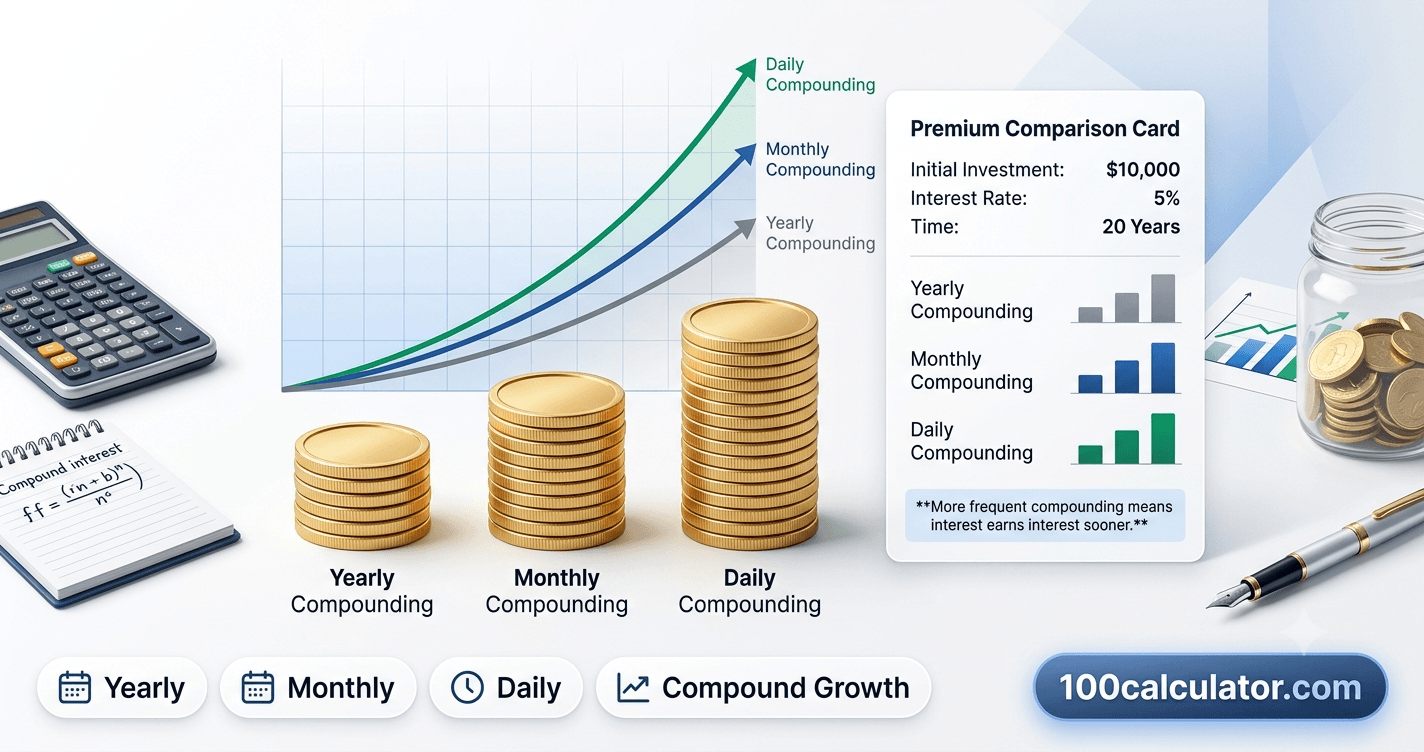 Finance Guide
See exactly how daily, monthly, and yearly compounding change your returns, with real examples, a comparison table, and tips for picking the right frequency.
Read More Finance Guide
Learn how the 4% rule works for retirement, how long $1,000,000 can last, and how our free 4 Percent Rule Calculator helps you plan smarter withdrawals.
Read More Finance Guide
Learn how to calculate simple interest on any loan step by step, with formulas, examples, and a free calculator to check your numbers instantly.
Read More Finance Guide
Learn how to calculate your FIRE number using the 25x rule and 4% rule, adjust for inflation, and find your Coast FIRE number with a free calculator.
Read More Finance Guide
Learn how the 4 percent retirement rule works, whether it still holds up today, and how to use our free 4 Percent Rule Calculator to plan your withdrawals.
Read More Finance Guide
Learn what the FIRE movement means, how the 4% rule works, and the exact steps to reach financial independence and retire early using our free calculator.
Read More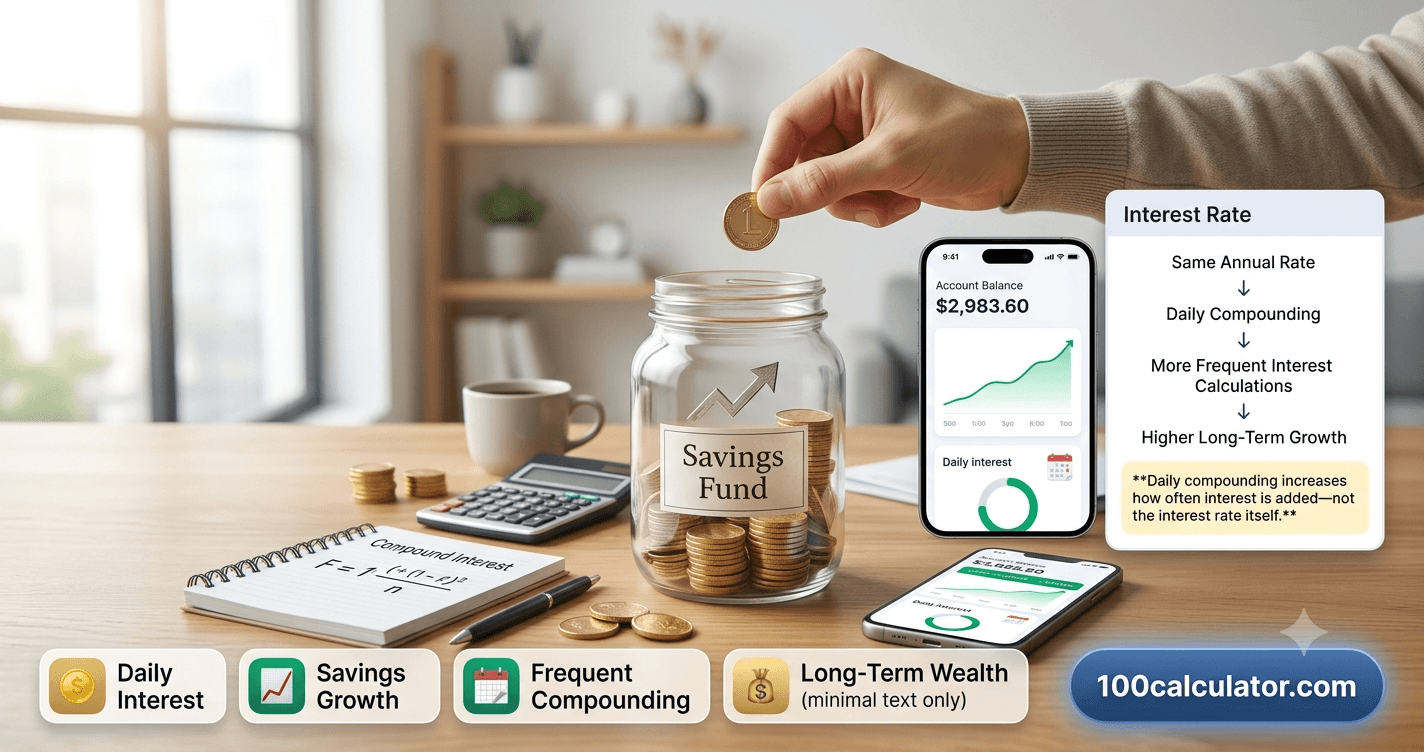 Finance Guide
See how daily compounding grows savings faster than monthly or annual interest, with real examples, and try our free Daily Compound Interest Calculator.
Read More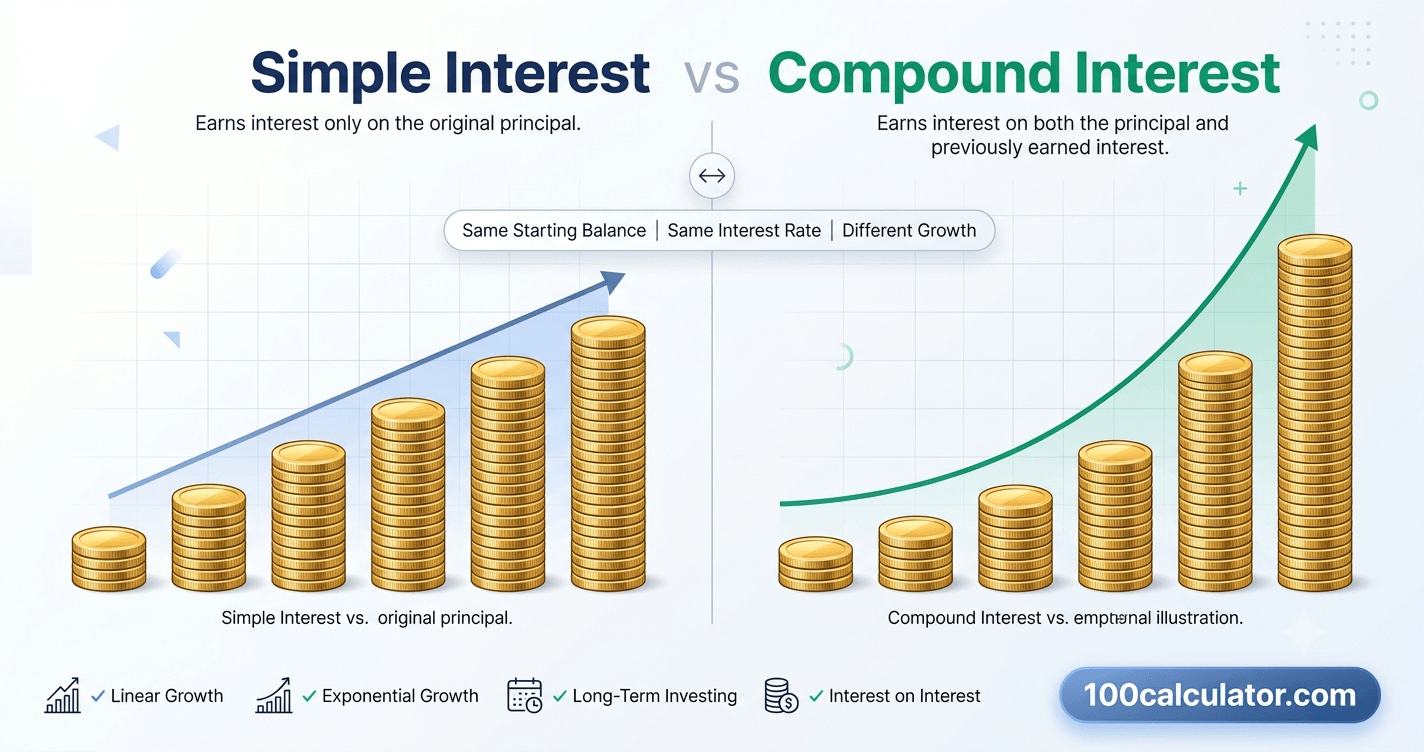 Finance Guide
See the key differences between simple interest and compound interest, with clear examples, formulas, and a free calculator for your own numbers.
Read MoreEvery compounding and retirement example uses real figures, so you can swap in your own savings rate and timeline.
We explain the assumptions behind the FIRE number and the 4% rule instead of presenting them as guarantees.
Daily vs. monthly compounding and starting five years earlier both change your outcome. These guides show exactly how much.
Interest rates and safe withdrawal research move over time, so this category gets revisited rather than left static.
Put what you just read into practice, try these free tools instantly, no sign-up required.
Calculate compound interest growth on your investments over time.
Quickly calculate simple interest earned or owed on a principal.
See how daily compounding interest grows your savings over time.
Plan your path to financial independence and early retirement.
Estimate safe retirement withdrawals using the 4% rule.